Wednesday, August 21, 2019

Freedom Of Speech

                             By Greg Johnson


Audio version here


Author’s Note:

This is the text of the speech I gave at the Erkenbrand Conference in the Netherlands on Saturday, November 3, 2018. I wish to thank the Erkenbrand organizers and everyone in attendance.    

I’ve got good news and bad news.

The good news is that everyone likes to get good news. It is easy to bring good news and easy to receive it.

The bad news is that nobody likes to get bad news. It is hard to bring bad news and hard to receive it. Receiving bad news is upsetting, which is why bringing bad news is difficult. Sometimes one has to deal with tears and anger.

But bad news is always more important than good news, because if something is going wrong you need to know. Bad news is not a problem. Bad news is one’s awareness of a problem. And no matter how bad a problem is, it is usually better to know than not know, because knowing about a problem is the first step towards fixing it. The only situation in which it might be better not to know is if a problem is insoluble, so that knowing about it simply adds to the problem rather than helps alleviate it.

Because bad news is upsetting, people often respond to it irrationally. Sometimes they would prefer not to know, even though you can’t solve problems you don’t know about. Sometimes they misplace their emotions. Instead of getting upset with the problem itself and seeking to solve it, they get upset with the bad news and seek to punish the bearer. But this is foolish, because society works best when information flows freely, and the most important information is bad news.

Because receiving bad news is upsetting and giving it is risky, dealing with bad news is a test of character. Those who receive bad news have to master their emotions, for if you dissolve into tears or explode into anger, you are making it more burdensome to bring you bad news in the future, which means that you might not receive news about a problem until it is too late to rectify it. Bringing bad news is also a test of character, because one always risks unpleasant personal consequences, but sometimes short-run personal risks are necessary to secure the greater good in the long run. But since the bearers of bad news are doing us all a favor, it is incumbent upon us to reduce the risks to the absolute minimum. This is why freedom of speech needs to be a right enshrined in the fundamental law of every land.

One does not need the right to freedom of speech to tell people what they want to hear. Freedom of speech is the freedom to tell people what they don’t want to hear — but need to hear anyway. A right to freedom of speech, moreover, is not necessary when one bears bad news to powerless people, for instance one’s children, one’s students, or one’s employees. After all, they can’t punish you for your good deed. We need the right to freedom of speech when we bear bad news to people who are more powerful than us — people who need bad news to make important decisions, and people who have the power to punish the bearers of bad news. But they can’t punish us if free speech is our right. Our rights trump their anger.

The two most important things for White Nationalists today are:

1. Breaking down the taboo against white identity politics, i.e., the idea that it is immoral for whites — and only whites — to take our own side in ethnic conflicts.

2. Maintaining our freedom of speech long enough to destroy that taboo.

White Nationalists are the bearers of bad news: that diversity is not a strength, but a source of alienation, conflict, and violence; that modern politics and morals have put our race on a path to extinction; and the only solution is to abandon liberalism, hedonistic individualism, globalization, and multiculturalism and bring back healthier, pro-white policies and values. We are changing people’s minds, and the establishment is powerless to change them back. Thus they are trying to censor us.

How can we deal with this threat?

In the short run, we need an internet Bill of Rights to protect dissidents from censorship and deplatforming. Beyond that, we need an across-the-board ban on politically-correct terms of service and employment, so we are free to dissent without threatening our livelihoods and social capital. If we can get such legislation in place, I am confident that we can win, and sooner rather than later. We will change so many minds that we will reach a tipping point. The taboo against white identity politics will melt away. Pro-white values will pervade the culture. Eventually we can mobilize enough support to overthrow the existing political establishment and replace it with a pro-white one.

But who told us that this would be safe and easy? White Nationalists are battling against the most all-encompassing soft-totalitarian system in history. It is a system bent on nothing short of the genocide of the white race, a goal so evil that when Plato and Aristotle drew up their lists of bad regimes, it was simply inconceivable. To overthrow this system, we might have to risk much more than our livelihoods. We might have to risk our very lives.

In the long run, though, we are probably going to win even if we don’t get an internet Bill of Rights. Censorship can slow us down, but it can’t really stop us. Already people are laying the foundations for a new internet that will be free of the choke points where censors perch. Thus, ultimately, the only way to prevent us from getting our message out online will be to shut down the web entirely. But the establishment cannot contemplate that, because the global political and economic system depends on the Internet.

The establishment — or at least the tiny stratum that is fully aware of the present threat of white identity politics — has the same relationship to the Internet as a junkie to his habit. He knows that it will kill him in the long run. But very few junkies overcome their addiction because they cannot bear the short term pain, even if it is the price of long-term survival.

Human beings might best be defined as the intermittently rational animal, and one of the most pervasive forms of irrationality is pursuing short-term self-indulgence at the expense of long-term well-being. This is how nations and individuals get into debt; this is how economic, demographic, and ecological crises arise. Fortunately for us, it is also how the system will fail to do the only thing that can stop the rise of White Nationalism — until it is too late.

So be of good cheer. If we continue to get out message out, we will win. And internet censorship cannot stop that process. It can only make it slower and more difficult.

Once we win, what should  our attitude be toward free speech? Some White Nationalists see free speech as merely a means to take power. I wish to argue that free speech is something that we will want to keep after we win.

Freedom of speech is a value because we are all fallible and vulnerable. Fallibility means that we can make mistakes. We can have false or inadequate pictures of the world which can be improved upon. Vulnerability simply means that unforeseeable contingencies can upset our best laid plans. To overcome mistakes and misfortunes, we first need to know about them. That means that we need the freedom to be the bearers of bad news. We need freedom of speech, because it makes genuine intellectual and social progress possible.

A society that lacks the ability to change lacks the ability to preserve itself. But a society can’t change if it lacks the ability to communicate bad news to its leaders. This is why we should want to protect freedom of speech, even when we are the ones in power.

Why do people oppose freedom of speech? There are two main reasons.

First, some people think they already have the truth. This truth is, moreover, absolute: It is complete and not subject to revision. Any contrary position is, therefore, a falsehood. This is why religions in the Abrahamic tradition — including Marxism — have opposed freedom of speech. They claim to be absolutely true. Therefore, all other religions are false — or, at best, semblances of the truth — and must be suppressed.

Second, people with a vested interest in a given political and economic system don’t like criticism because it threatens their power and peace of mind.

Both views are irrational.

We all make mistakes. We all suffer misfortunes. But only some of us are destroyed by them. Others learn from them and overcome them. But, again, the first step to overcoming a problem is knowing that one has it.

One of the most powerful ideas of Plato’s Republic is that political regimes and personality types have analogous structures, so the city can throw light on the soul, and the soul can throw light on the city.

Years ago, I read a listicle on signs that your boss might be a narcissist. The item that made the strongest impression on me is: Narcissists tend to punish bearers of bad news.

Defining narcissism is a tricky thing, because we live in a society in which all manifestations of honor, especially male honor, have been pathologized as narcissism. There is nothing wrong with thinking well of yourself and demanding that others treat you with respect. There is nothing wrong with taking pleasure in praise for your achievements. There is nothing wrong with high self-esteem, as long as it is based on objective merits.

Narcissism is a problem, though, when one puts preserving a positive self-image ahead of positive self-actualization.

Everyone makes mistakes. The path to self-actualization requires that we acknowledge our mistakes, take responsibility for them, learn what we can from them, and then rise above them. The narcissist, however, seeks to preserve his positive self-image at all costs. So when confronted with his mistakes, he denies them and doubles down on them. Or he blames others for his mistakes. Or he goes on the attack, particularly against the bearer of bad news. Anything, really, to avoid taking responsibility and acknowledging that he might have some room to learn and grow.

Narcissists may be highly attractive people. They may have enormous potential. Unfortunately, they think they are perfect just the way they are, and such complacency is deadly to personal growth. So as time passes, you will notice that narcissists seldom actualize their potential. Instead, they come off as dilettantes with a smooth patter. Older narcissists also seem increasingly puerile when compared to their contemporaries.

Narcissists also have difficulty maintaining friendships. Friends tell you what you need to hear — even if it is painful. Flatterers tell you what you want to hear. Friends aid self-actualization because they will tell you bad news. Flatterers encourage complacency because they only tell you how wonderful you are. Friends threaten a narcissist’s positive self-image, whereas flatterers reinforce it.

Obviously it is disastrous to put narcissists into positions of power, because they end up making important decisions based on false or incomplete information fed to them by flatterers. It is no way to run a society.

Today’s censorious establishment is narcissism writ large.

By censoring and suppressing White Nationalist ideas, the establishment changes almost nothing. We like to flatter ourselves that the White Nationalist movement is the driving force behind the rise of white racial consciousness. Our enemies share the same illusion. But the main forces behind the rise of White Nationalism are the moral outrages and catastrophic consequences of multiculturalism and white dispossession. People are coming to us in droves less because our movement is pulling them than because the system is pushing them. Which means that white racial consciousness would continue to rise even if White Nationalists were completely silenced.

Our anti-white oppressors, of course, do not see it that way, for that would threaten their positive self-image. The rise of white identity politics cannot be their fault. So it has to be our fault. They think white identity politics only exists because silver-tongued deceivers like Jared Taylor and Millennial Woes have Twitter accounts. Which is why they conclude that censorship will actually stop us. But White Nationalists are not the cause of ethnic conflict. We are just the bearers of bad news — and advocates of a workable alternative.

Censoring White Nationalists online does not stop people from noticing things, drawing conclusions, and formulating dissenting thoughts. It does not prevent people from discretely communicating their thoughts face to face or organizing in the real world. All censorship does is render the full extent of dissent invisible. This makes it difficult for the establishment to make rational political decisions. Censorship does not make the system stronger; it only makes it blinder, brittler, and more vulnerable. Advocates of censorship are like people who remove the battery from their smoke detector because they are tired of false alarms. But when the house catches fire, you need to know sooner than later.

If I were running a society, I would like to know who the dissidents are and what they think. So I would make freedom of speech a fundamental political right. If the dissidents are right, we can learn from them. If they are wrong, we can instruct them. If they are dangerously and stubbornly wrong, we can keep an eye on them.

But if we win, are we really going to give our enemies the freedom to regroup and rebrand, then lead our people back down the road to extinction once more? Don’t we want to shut their dirty, lying mouths forever?

There are two points here.

First, if we do come to power, we will have to purge the existing institutions. We will not leave wealth, influence, and political power in the hands of implacable enemies. We will take away their platforms in politics, the media, and the academy. We will just give them early retirements and a lifetime ban on addressing the public. Then we will fill their positions with people who are loyal to us. But that is a far cry from instituting a regime of intellectual censorship.

Second, even if there is a great purge of the existing system, no matter what kind of society you have, in every generation, there will be aberrant personalities who are drawn to ideas that threaten social order. The best way of preventing bad ideas and institutional subversion from taking root again is not to create a world where people have never heard of such things. Instead, we need to create a world where everyone has heard of them. A proper education imparts sound information as well as healthy values and tastes. Such an education will inoculate us against bad ideas. We don’t have to censor bad ideas if we are immune to them.

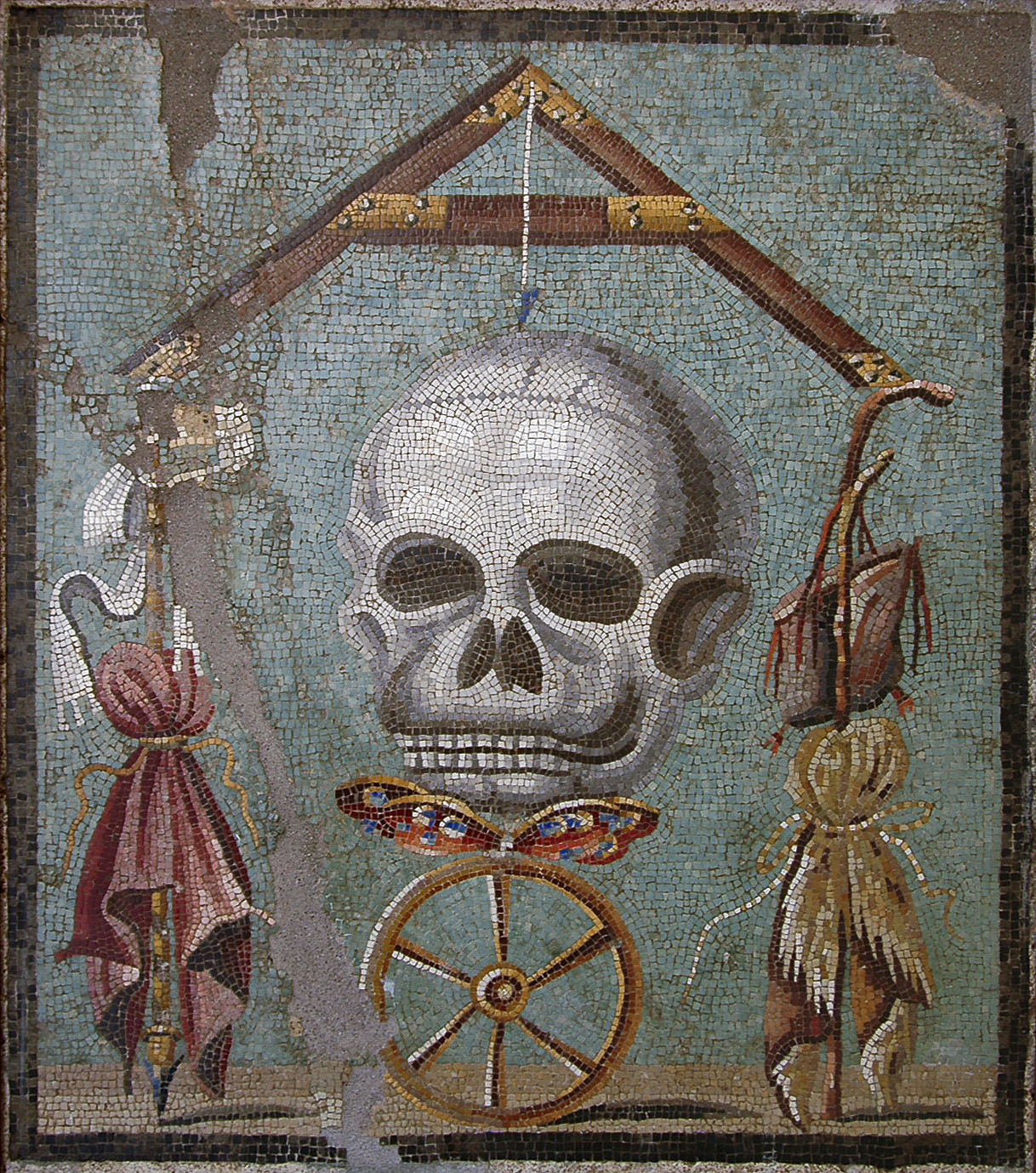
Evil will always be with us. But we need not fear it if we are immune to its charms. We should keep evil around, but keep it powerless, as a kind of memento mori, a death’s head at the feast, so we have a constant reminder of the hell on earth we will vanquish — but only if we start using, and defending, our freedom of speech today.

Monday, August 19, 2019

"I'm Not A Conspiracy Theorist, But...." Jeffrey Epstein's Death Gives New Life To "Conspiracy Theories"

                             By Greg Johnson


When Jeffrey Epstein died on August 10, 2019, he was one of the world’s most important prisoners because of the people he might implicate in his crimes.

Epstein was charged with multiple counts of sex trafficking and conspiracy to traffic minors for sex. But he was no ordinary pervert or pimp. Epstein enjoyed enormous wealth from obscure origins. He was described as a financier but had only one known client, Les Wexner, owner of Victoria’s Secret and other companies.

Epstein used his wealth to buy his way into the upper echelons of the American-Anglo-Jewish political and financial elite. Epstein’s black book contained contact information for such people as Donald Trump, Bill Clinton, Queen Elizabeth II, Prince Andrew, King Salman of Saudi Arabia, Alan Dershowitz, Ehud Barak, Henry Kissinger, Michael Bloomberg, and many other oligarchs and entertainers.

Epstein apparently had a taste for underage girls. Underage girls, of course, cannot legally consent to sex, so Jeffrey Epstein was a serial rapist. He widely advertised his tastes, calling his private jet the Lolita Express. In 2006, the FBI began investigating Epstein, tracking down more than 100 women, many of them underage, who had been paid to perform sex acts for Epstein and his wealthy and influential friends.

But in 2007, Epstein cut a deal with US Attorney Alex Acosta to avoid federal prosecution and prison. According to the terms of this agreement, Epstein agreed to plead guilty to two felony prostitution charges in state court. In exchange, Epstein and his accomplices received immunity from federal sex-trafficking charges that could have landed them in prison for life. Epstein served 13 months in a private wing in a county jail. He was allowed to leave the jail 16 hours a day, six days a week. Basically, he only slept there. His alleged accomplices were never prosecuted. The Epstein deal was sealed, so that the nature and full extent of his crimes were never made public. The Epstein case was unsealed earlier this year due to the efforts of reporter Julie Brown, eventually leading to Epstein’s arrest and death.

Acosta ended up as Secretary of Labor in the Trump Administration. Acosta reportedly told a White House official, who then told reporter Vicky Ward, that he had signed the non-prosecution agreement because he had been told to “back off” on Epstein. “I was told Epstein ‘belonged to intelligence’ and to leave it alone.” If this is true, one has to ask: Which country’s intelligence services did Epstein belong to? And who told Acosta to back off?

Philip Giraldi suggests that Israel is a likely candidate. Epstein was Jewish. So is his one known client, Les Wexner. His former girlfriend, confidante, and alleged co-conspirator in sex trafficking is Ghislaine Maxwell, the daughter of Robert Maxwell (born Ján Ludvík Hyman Binyamin Hoch), a wealthy Jewish businessman and swindler who, like Epstein, died in mysterious circumstances. According to Giraldi, “After his death, [Maxwell] was given a state funeral by Israel in which six serving and former heads of Israeli intelligence listened while Prime Minister Yitzhak Shamir eulogized: ‘He has done more for Israel than can today be said.’”

All of this raises uncomfortable questions. Was Epstein entrapping his wealthy and influential friends into committing statutory rape? Was he also collecting other more or less embarrassing dirt on them, in order to financially and perhaps politically blackmail them? That’s my working hypothesis.

I think Jeffrey Epstein was probably an Israeli intelligence agent, given the cover of a wealthy and connected financier, who pimped out underage girls to wealthy and influential perverts so he could blackmail them for money and business and political favors. This theory fits the known facts, has predictive power, and can be verified or refuted by further investigation. If this hypothesis is true, then quite a few powerful people had reasons to ensure that Epstein never stood trial or cut a deal with the prosecution.

Now if I knew Epstein was a likely target for assassination, so did the people who prosecuted him. So did Epstein’s jailers at New York’s Metropolitan Correctional Center. Everybody should have known that Epstein was a target as soon as he was arrested on July 6, 2019. Those who somehow initially overlooked this fact certainly had no excuse after Epstein was found injured and semiconscious in his cell on July 23, 2019. Epstein had marks around his neck consistent with either attempted suicide or attempted murder. To make matters worse, Epstein and his cellmate dummied up about what happened.

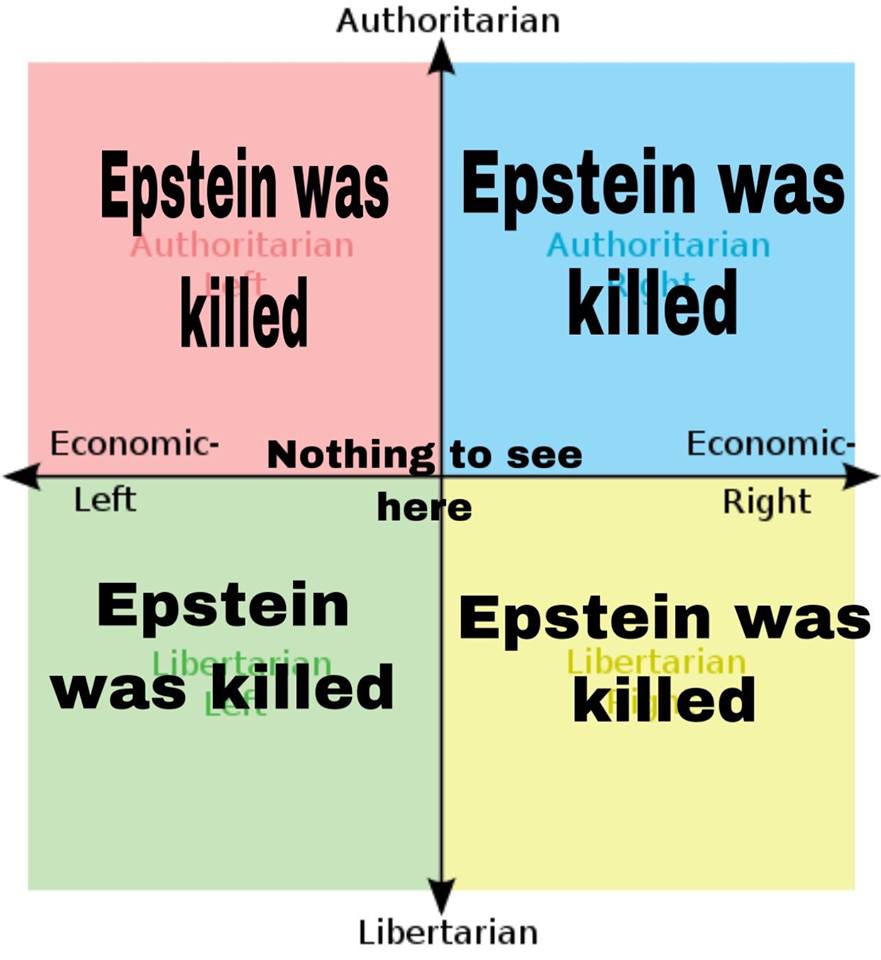
Thus when Jeffrey Epstein turned up dead with marks around his neck consistent with murder or suicide, everyone with two IQ points to rub together and a cursory knowledge of his case concluded that his death was no mere suicide.

Let’s think this through. Jeffrey Epstein was either murdered or he committed suicide. Nobody has suggested that Epstein died of natural causes. I am surprised nobody has suggested auto-erotic self-asphyxiation, given what a colossal pervert he was.

Because the Metropolitan Correctional Center had ways to prevent Epstein from committing suicide, if it was suicide, then Epstein was allowed to kill himself. If he was allowed to kill himself, it was either intentional or negligent.

If Epstein was intentionally allowed to kill himself, then the probable motive is the same as murder, namely to prevent Epstein from testifying.

If Epstein was negligently allowed to kill himself, then we have to conclude that the US government, particularly in New York City, is no longer a serious institution. Instead, it is functioning on a level somewhere between a Latin American banana republic and an African failed state. In particular, we have to conclude that the people in charge of New York’s Metropolitan Correctional Center are either criminal or negligent, or perhaps a combination of the two.

Moreover, any intelligent person could have concluded all of this before we began hearing stories of mysteriously malfunctioning surveillance cameras, mysteriously discontinued suicide monitoring, and mysteriously absent guards.

Whether it is murder or suicide, Jeffrey Epstein’s death is the scandal of the decade. Whether it is murder or suicide, and whether we ever get the truth or not, the Epstein case can only further unravel the average American’s already frayed trust in the political system and mainstream media. And that’s really good for populist dissidents like me, for populism feeds on the breakdown of trust in the establishment.

When the Epstein debate is between those who think that the system was evil enough to murder him or incompetent enough to let him commit suicide, the system can’t win, and we dissidents can’t lose. No matter what happened, the truth hurts them and helps us.

But what if we never even learn the truth? Then the debate will be between people who think the system is evil enough to cover up the truth and the people who think the system is too incompetent to find it. Heads we dissidents win, tails the establishment loses.

I like those odds.

Furthermore, something else died on August 10th, 2019, something of potentially far greater import than Jeffrey Epstein: The phrase “conspiracy theory” lost its power to deter critical thinking about the consensus manufactured and imposed by the political and media establishment.

In the hands of the establishment, “conspiracy theory” is simply a term of abuse masquerading as an objective category. For the establishment, a “conspiracy theory” is just a dissenting viewpoint that threatens its power.

But there’s nothing wrong with conspiracy theories. A “theory” is simply an explanation that ties together observed phenomena in terms of an underlying set of causes, e.g., the theory of evolution or atomic theory. A “conspiracy theory” is an explanation that ties together observed phenomena in terms of underlying causes as well, in this case human planning. The Latin root of “conspiracy,” conspirare, mean to “whisper together.”

A conspiracy is a kind of human planning and action that has two essential characteristics. First, a conspiracy requires at least two people. An idea hatched and carried out by a lone person may be a plot or a crime, but it is not a conspiracy. Second, a conspiracy requires secrecy, because the things that people conspire about cannot be discussed openly without endangering the plan.

Conspiracies are often criminal but need not be. Sometimes one must resort to conspiracies to do perfectly legal things because to plan and act openly would tip one’s hand to rivals and enemies. So when football players huddle, they are conspiring. When businessmen develop products, they are conspiring. When governments plan espionage and warfare, they are conspiring. When political parties and candidates plan election campaigns, they are conspiring. When dissidents plan meetings and events, they are conspiring. I conspire every day of my life, from dawn to dusk.

Much of human history springs from plans and actions that begin in secret. Thus to stigmatize conspiracy theories as such would require us to throw out a vast number of criminal prosecutions. The same goes for most journalism and historiography, which often seek to tie together multiple observed facts in terms of unified plans. Most of the best literature and film on politics, espionage, and crime would have to be discarded as well. Can you imagine a James Bond movie in which merely uttering the words “conspiracy theory” would paralyze thought and action?

Moreover, the very same people who denigrate “conspiracy theories” engage in them all the time. But they don’t present them as theories. They just pass them off as facts. Consider this howler from Julia Ebner, who begins her essay “Stop the Online Conspiracy Theories Before They Break Democracy,” with the words: “Organised conspiracy theorist networks have launched an all-out information war across Europe.” Of course, an “organized network” is just a clumsy way of saying “conspiracy.”

For the Left, Russia collusion, patriarchy, and white privilege are not conspiracy theories. They’re just facts. Which means that a “conspiracy theory” is just something that the establishment doesn’t want you to believe. A “conspiracy theory” is just a “dissenting idea,” which means that Ebner’s real title should he “Stop the Online Dissenting Ideas Before They Break Democracy.”

I’ll bet you thought that one feature of democracy is protecting dissenting ideas. That is certainly the purpose of the First Amendment in the United States. Freedom of speech needs to be a constitutional right to allow people to dissent from the opinions of the powerful, who might otherwise censor and punish disagreement.

Like “discrimination” and “generalization,” which the establishment also stigmatize as wicked, conspiracy theorizing—like theorizing in general—is simply a form of intelligence. Theorizing is what smart people do when faced with bewildering and complex phenomena. An establishment that praises credulity and stupidity is obviously up to no good.

Indeed, attacking conspiracy theories as such is an act of desperation. If truth is on your side, then it should be easy to refute contrary positions. The only reason one would want to disqualify dissent as such is the inability to refute dissenting views on their individual merits. But that’s exactly what one would expect from a system founded on lies, particularly the strange, self-contradictory lie that people are all equal and their differences are always a source of strength.

Conspiracy theorizing has been rising in recent years as trust in the establishment declines, and the establishment was pushing back. Before Epstein’s death, there was an alarming trend to weaponize the “conspiracy theory” smear to silence dissidents.

For instance, on August 6, 2018, Facebook, Apple’s iTunes, YouTube, and Spotify removed all content by conspiracy theorist Alex Jones and his InfoWars site from their platforms. What’s the most plausible explanation for all four platforms dumping Jones on the same day: conspiracy or coincidence?

In January of 2019, YouTube announced that it would tweak its algorithms to recommend fewer “conspiracy theory” videos. Of course, YouTube does not define Russia collusion as a conspiracy theory, but it does brand white genocide and the great replacement as conspiracy theories.

Then on August 1, 2019, Yahoo! News reported on an FBI intelligence bulletin from the bureau’s Phoenix field office, dated May 30, 2019, which identified “conspiracy theories” like Pizzagate and QAnon to be domestic terrorist threats.

But since Epstein’s death, “conspiracy theories” are no longer marginal. They are mainstream.

Donald Trump has retweeted speculations that Bill Clinton was behind Epstein’s death. Democrats, for their part, are floating the theory that Trump was behind Epstein’s demise. Both Trump and Clinton are womanizers who knew Epstein.

Former New York Mayor and prosecutor Rudolph Giuliani pronounced the story of Epstein’s suicide “incredible” and claimed that there are “probably 50 very important people that have a motive to kill him.”

Current New York Mayor Bill De Blasio agreed, saying that Epstein’s death was “way too convenient” and could not be attributed to “traditional human error.” De Blasio basically said, “I’m not a conspiracy theorist, but . . .” But, as De Blasio put it, “sometimes you see a series of events that you cannot give a normal explanation for, and there needs to be a full investigation”—which pretty much sums up the feelings of conspiracy theorists on this matter.

Since Epstein’s death, media attempts to contain speculation with the “conspiracy theory” canard have been rather half-hearted, with the lamest attempts coming from the most authoritative sources. For instance, the BBC clucks disapprovingly that “Just hours after the high-profile financier Jeffrey Epstein was found dead on Saturday, unsubstantiated theories about his death began to gain traction online.”

Epstein’s death is obviously fishy to any intelligent person. So of course people immediately began to speculate about alternative scenarios. Complaining that such theories are “unsubstantiated” is silly. Of course they are unsubstantiated. There has not been time to substantiate them. Every theory is unsubstantiated before it is tested. That is what investigation is for. But apparently people at the BBC would like you to suspend judgment about the Epstein case and simply believe what they tell you.

After Epstein, we’re all conspiracy theorists now. The distinction between marginal “conspiracy theories” and mainstream “facts” has collapsed. The only relevant distinction now is between good conspiracy theories and bad ones, true conspiracies and false ones. I will discuss that distinction in a future article. This is a necessary labor, because I have a strong distaste for bad conspiracy theories, which often draw on false metaphysical assumptions and smack of madness.

Conspiracy theories are organically connected with populism. Populism holds that government is legitimate only if it governs for the common good. Populists regard factions and special interests as inimical to good government. Populists believe that government deliberations should be maximally transparent to guard against subversion by special interests, which of necessity must conspire in secret against the public good.

As I argued above, Epstein’s death helps populists no matter what the outcome of the case. First and foremost, Epstein’s death has deprived “conspiracy theory” of its power of marginalize, stigmatize, and paralyze critical thinking. Second, no matter what side of the Epstein debate you take, the system loses: If Epstein was murdered or intentionally allowed to commit suicide, the system is evil. If Epstein was negligently allowed to commit suicide, then the system is incompetent. If we never learn the truth about Epstein’s death, then the debate will be between those who think the system is evil enough to cover up the truth or too incompetent to discover it.

Please note that none of these populist gains are contingent on ever discovering the truth about Epstein’s death. The system has already written off these losses and moved on, leaving us to capitalize on them. The best-case scenario for the system entails a catastrophic loss of public trust, prestige, and narrative control.

It’s almost as if Epstein’s death was engineered by people who have no investment in the long-term viability of the American system. Perhaps America isn’t their country. Or perhaps they fear a much worse outcome.

Which makes me wonder: What would happen if the system’s worst-case scenario came true, namely that we learn the full truth about Jeffrey Epstein and his friends? Given the waning power of the conspiracy canard and the role of genuine investigative journalism in bringing Epstein’s crimes to light, there is some reason for hope. But we shouldn’t wait around for such an eventuality. Instead, we should be capitalizing on the gains the Epstein case has already handed us.