Wednesday, August 23, 2017

Julius Evola: The World's Most Right-Wing Thinker

                      By Jonathan Bowden 


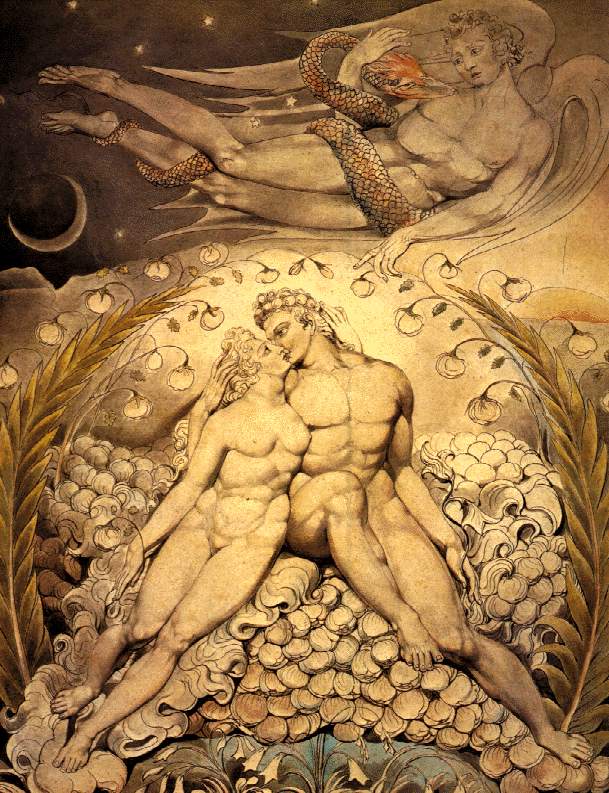
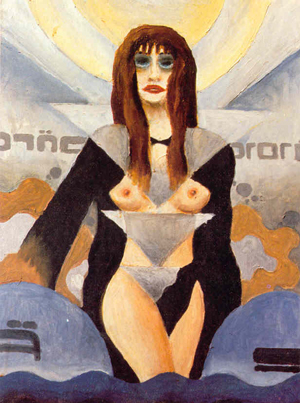
Julius Evola, La Genitrice


Editor’s Note:

This text is the transcript by V. S. of Jonathan Bowden’s lecture on Evola delivered to the 27th meeting of the New Right in London on June 5, 2010. As usual, I have deleted a few false starts and introduced punctuation and paragraph breaks for maximum clarity. You can listen to it at YouTube here. Three passages are marked unintelligible. If you can make out the words, please post a comment below or contact me at editor@counter-currents.com. 

This is the 27th meeting of the New Right, and we’ve waited quite a long time to discuss one of the most important thinkers of the radical Right and of a Traditional perspective upon mankind and reality, and that is Baron Julius Evola.

Now, Evola is in some respects to the Right of everybody that we’ve ever considered in nearly any of these talks and not in a sort of unprofound or sententious manner. Julius Evola was somebody who rejected purposefully and metaphysically the modern world. Now, what does that mean? It basically means that at the beginning of the last century, Baron Evola, who is a Sicilian baron, decided that there are about four alternatives in relation to modern life for those of heroic spirit.

One was suicide and to make off with one’s self by opening one’s veins in the warm bath like Sicilian Mafiosi and Italian cardinals and Sicilian brigands and ancient Romans.

Another was to become a Nietzschean, which for many people in tradition is a modern version of some, but by no means all, of their ideas, and it’s a way of riding the tiger of modernity and dealing with that which exists around us now. Later, people like Evola and other perennial Traditionalists as we may well call them became increasingly critical of Nietzsche and regard him as a sort of decadent modern and an active nihilist with a bit of spirit and vigor but doesn’t really have the real position.

I make things quite clear. I would be regarded by most people as a Nietzschean, and philosophically that’s the motivation I’ve always had since my beginning. That’s why parties don’t really mean that much to me, because ideas are eternal and ideas and values come back, but movements and the ways and forms that they take and expressions that they have come and go.

Now, moving from the Nietzschean perspective, which of course relates to the great German thinker at the end of the 19th century and his active and quasi-existential and volitional view of man, is the idea of foundational religiosity or primary religious and spiritual purpose. In high philosophy, there are views which dominate everyone around us and modern media and everyone who goes to a tertiary educational college, such as a university, in the Western world. These are modern ideas, which are materialistic and anti-spiritual and aspiritual and anti-religious or antagonistic to prior religious belief so much so that it’s taken as a given that those are the views that one holds. All of the views that convulsed the Western intelligentsia since the Second European Civil War which ended in 1945, ideas like existentialism and behaviorism and structuralism and so on, are all atheistic and material views. They’ve been discussed in other meetings. As one goes back slightly, one has various currents of opinion such as Marxism and Freudianism and behaviorism beginning in the late 19th century and convulsing much of the 20th century.

But these are views that an advanced Evolian type of perspective rejects. These views are anti-metaphysical and often counter the idea that metaphysics doesn’t exist, that it’s the school returning of the late Medieval period, what was called the Medieval schoolmen. In some of his books, Evola talks about Heidegger, Martin Heidegger, of course, who got in trouble in the 1930s for his alleged academic positioning in relation to the most controversial regime of modernity. Heidegger, in my opinion, and I’ve talked about Heidegger before, was a quasi-essentialist to an essentialist thinker. Evola believes he’s an existentialist, but that’s largely by the by.

These anti-metaphysical views are that which surrounds us. All liberalism, all feminism, all quasi-Marxism, all bourgeois Marxism, all cultural Marxism, the extreme Left moderated a bit into the Center, high capitalist economics and the return of old liberalism against the Keynesianism which was the soft Marxism that replaced it earlier in the 20th century . . . All of these ideas are materialistic and atheistic and aspiritual and anti-metaphysical.

You could argue that the heroic Nietzschean dilemma in relation to what is called modernity is a quasi-metaphysical and metaphysically subjectivist view that there are values outside man and outside history that human beings commune with by virtue of the intensity with which they live their own lives. But there is a question mark over (1) the supernatural and (2) whether there is anything beyond, outside man within which those values could be anchored.

So, the idea of permanence, the idea of a metaphysical realm which most prior civilizations are based on—indeed Evola and the Traditionalists would say all prior civilizations are based on—is questioned by the Nietzschean compact. It is ultimately, maybe, the beginnings of a very Right-wing modern view, but it is a modernist view. Take it or leave it.

The sort of viewpoint that Evola moved towards, and there was a progression in his early life and spiritual career and intellectual and writing career, is what we might call metaphysical objectivism. This is called in present day language foundationalism or fundamentalism in relation to religiosity. Fundamentalism, like the far Right, are the two areas of culture that can’t be assimilated in what exists out there in [unintelligible] Street. They’re the two things that are outside and that’s why they can never entirely be drawn in.

Now, metaphysical objectivism is the absolute belief in the supernatural, the absolute belief in other states of reality, the absolute belief in gods and goddesses, the absolute belief in one supreme power (monotheism as against polytheism, for example), the absolute belief that certain iterizations, certain forms of language and spiritual  culture exist outside man: truth, justice, the meaning of law, purposive or teleological information about how a life should be lived. Most people in Western societies now are so dumbed down and so degraded by almost every aspect of life that nearly any philosophical speculation about life is indeterminate and almost completely meaningless. It’s a channel which they never turn on.

Now, the type of metaphysical objectivism that Evola postulates as being an anchor for meaning in modern life can take many different forms. One of the great problems many Right-wing or re-foundational or primal movements or tribal movements or nationalistic movements of whatever character have is if there is a religion somewhere behind it–as there often is for many but not all of the key people involved in such movements and struggles–what form should that be? Everyone knows that culturally, and this is true of a formulation like GRECE or the New Right in France, as soon as you begin to get people of like-mind together they will split on whether they’re atheist or not, secularist or not, but they are also, on a deeper cultural level, split on whether they’re pagan influenced or Christian. Such divisions always bedevil Right-wing cultural and metapolitical groups.

The way that the Evolian Tradition looks at this is to engage in what is called perennialism. This is the inherent intellectual and ideological and theological idea that there are certain key truths in all of the major faiths. All of those faiths that have survived, that are recorded, that have come down to us, even their pale antecedents, even those dissident, deviant and would-be heretical elements of them that have been removed, in all of them can be seen a shard of the perspectival truth that these particular traditions could be said to manifest. Beneath this, of course, is the ethnic and racial idea that people in different groups within mankind as a body perceive reality differently, experience it differently, have different intellectual and linguistic responses to it, and form different cults, different myths, different religions because they are physically constituted in a manner that leads to such differentiation.

This can lead among certain perennialists to a sort of universalism at times, almost a neo-liberalism occasionally, where all cultures are of value, where all are “interesting,” where all are slightly interchangeable. But given that danger, the advantage for a deeply religious mind of the perennial tradition is to avoid the sectarianism and negative Puritanism which is inevitably part and parcel of building up large religious structures.

As always, a thinker like Evola proceeds from the individual and goes to the individual. This can give thinking of this sort a slightly unreal aspect for many people. Where are the masses? Where is the democratic majority? Where is the BBC vote that decides? The truth is Evola is not concerned with the BBC vote. He’s not concerned with the masses. He regards the masses, and the sort of theorists who go along with him regard the masses, as sacks of potatoes to be moved about. His thinking is completely anti-democratic, Machiavellian to a degree, and even manipulative of the masses as long as it’s done within an order of Tradition within which all have a part.

Evola dates the decline of modernity from, in a sense, the end of the Middle Ages and the beginning of the Renaissance. But many thinkers of a similar sort date the slide at other times. Evola’s a Catholic and once asked about his religious particularism he said, “I’m a Catholic pagan,” which is a deeply truthful remark, dialectically. I am not a Christian, but if you look at it from the outside the core or ur part of Christianity is obviously Roman Catholicism, even though I was technically brought up in the Protestant sort of forcing house of Anglicanism. A wet sheet religion if ever there was one. But Anglicanism, of course, is a syncretic religion. It’s a politically created religion. A bit Catholic, a bit Protestant, but not too much, and with a liberal clerisy at the top that’s partly Protestant-oriented within it and exists to manage the thing.

One of the truthful, although this is en passant, asides that can be made about Anglicanism and the reason why it’s been supported even today through state establishmentarianism when virtually no one attends these churches at all except the odd old lady and immigrants from the Third World, is that it’s a way of damming up some of the extremism that does lurk in religion. Religion is a very dangerous formulation as the modern world is beginning to understand.

I remember Robin Cook, who was a minister who opposed the Iraq War and so on and died on a Scottish mountain, all that obsessive walking when one’s thin and redheaded can lead to undue coronaries, but Cook once said, and he’s a son of the manse like most of these Scottish politicians are, in other words, he comes from a Calvinist background to a degree, he said that in his early life he thought with the general Marxist and Freudian conundrum that religion was over. And now towards the end of his life, this is just before he died, he said, “the dark, clammy, icy hand of religiosity,” in all sorts of systems, “is rising again, and secular Leftists like us,” he’s speaking of himself and those who believe in his viewpoint, “are feeling the winds of this force coming from the side and from behind.” It’s a force that they don’t like.

I personally believe, as with Evola, that people are hardwired for faith. Maybe 1 in 10 have no need for it at all. But for most people it’s a requirement. The depth of the belief, the knowledge that goes into the belief, the system they come out of, is slightly incidental. But man needs emotional truths. George Bernard Shaw once said, “The one man with belief is worth 50 men who don’t have any” and it’s quite true that all of the leaders of great movements and those that imposed their will upon [unintelligible] inside and outside of particular countries have considerable and transcendent beliefs, philosophical, quasi-philosophical, religious, semi-religious, philosophical melded into religious and vice versa. Without the belief that there’s something above you and before you and beyond you and behind you that leads to that which is above you, we seem as a species content to slough down into the lowest common denominator, the lowest possible level.

Evola and those who think like him believe that this is the lowest age that mankind has ever experienced, despite its technological abundance, despite its extraordinary array of technological devices that even in an upper pub room in central west London you can see around you. It is also true, and this is one of the complications with these sorts of beliefs, that some of the methodologies that have led to this plasma screen behind me would actually be denied by elements of some of the religiosity that people like him would put forward, but that’s one of the conundrums about epistemology, about what you mean by meaning, which lurks in these types of theories.

The interesting thing about these beliefs is that they are primal. Turn on the television, turn on the radio, the World Cup is just about to begin. Everywhere there is trivia. Everywhere there is celebration of the majority. Everywhere there is celebration of the desire for us all to embrace and become one world, one world together. As someone recently said, “I don’t want to be English. I don’t want to be British. England’s a puddle,” he said. “I want to step out. I want to be a citizen of the world! I don’t want to have a race. I don’t want to have a kind. I don’t want to have a group . . . even a class! I don’t want to come from anywhere. I want to be on this planet! This planet is my home!” Well, my view is that sort of fake universality . . .  Maybe you should get him one of these dinky rockets and fire himself off into some other firmament, because this is the home that we have and know. And the only reason that we can define it as such is by virtue of the diversity of what exists upon it. But the number of people who wish to maintain that level of diversity and the pregnant meanings within it seem to get smaller and smaller with each generation.

The politicians that we have now are managers of a social system. It’s quite clear that we do not have three ruling parties, but one party with three wings, the nature of which are interchangeable in relation to gender, where you come from in the country, class, background, how you were educated, and whether you arrived in the country as a newcomer in the last 40 to 50 years or not.

Now, Evola’s step back from what has made the modern world leads to certain radical conclusions about it which are spiritually and politically aristocratic. Most people are only aware of the Left-Right split as it relates to a pre-immigration, slightly organic society where social class was the basis for political alignment. Bourgeois center Right: conservatism of some sort. Center Left: Labour, social-democratic, trade unionist, and so on. Now we have a racial intermingling which complicates even that division. The distinction between the aristocratic and upper class attitude and the bourgeois attitude, which is as pronounced as any Left-Right split between the proletariat and the bourgeoisie, is that which Evola advocates.

Evola believes, in some respects, in masters and slaves, or certainly serfs. He believes that the merchant and those who deal purely with economics have to be subordinated to politics, to higher politics, to metapolitics, to military struggle. He believes that the warrior and the religious leader and the farmer and the intellectual/scholar/craftsman/artist are uniquely superior to those that make money, and nearly all of Evola’s views are in some way a form of aristocraticism.

If you look at all of the sports that he favors–fencing, mountaineering–they all involve lone individuals who prepare themselves for a task which is usually dangerous and which can usually result–mountaineering for example and his book Meditations on the Peaks–in annihilation, if you go wrong, but creates an extraordinary and ecstatic sense of self-overbecoming if you conquer K2, the Peruvian mountains, the Eiger, Mount Everest and so on. Even in the more populist forms of mountaineering, the sort of beard and upper middle class Chris Bonington cheery mountaineering as you might call it, there is a streak of aristocratic, devil may care and Byronic license. The bourgeois view is, “Why do that!? It’s dangerous. It’s pitiless. You could be hurt and injured! There’s no profit. It serves no higher reason than itself.” For Evola, the reason and the purpose is the reason to do it. It is the stages that you go through and the mental states you get into as you prepare and you execute a task which is dangerous and the same analogy can be extended to martial combat, the same analogy can be extended to sports like ancient wrestling.

Modern wrestling is a circus, of course, where the outcome is largely decided by the middlemen who negotiate the bouts between clowns, who can still damage each other very severely. But ancient wrestling was a bout that ended very quickly and was essentially religious, which is why the area that they wrestled in was purified with salt in most of the major traditions.

Fencing: Take away the protective gloves and gear and you have gladiatorial combat between people who are virtually on the brink of life and death. It’s only one step removed from Olympic fencing. Notice that in the contemporary Olympics, a movement that was founded in modernity on the Grecian ideal, nearly always founded by aristocrats, all of the early victors in shooting and fencing and all these early sports are aristocrats. Of course, the early Olympics have their funny side. Many of the female athletes that won the early Olympics were transsexuals. Of course, medical checks were instituted to prevent hermaphrodites and people of diverse genders and that sort of thing from competing in these competitions. But the individualistic sports in a mass age have been disprivileged and are largely regarded as strange wonderland sports that the masses only flip channels over in relation to the Olympics.

For a man like Evola and for the sensibility which he represents, things like sport are not a diversion. They are targets for initiation in relation to processes of understanding about self, the other, and life that transcend the moment. So, one bout leads to another, leads to another moment of skill. It is as if these moments, which most people always try to avoid rather than engage upon, are in slow motion. The whole point of Evola’s attitude toward these and other matters is to go beyond that which exists in a manner which is upwards and transcendent in its portending direction.

This is a society which always looks downwards. “What will other people think? What will one’s neighbors think? What will people out there think? What will all this BBC audience think? What do the masses, Left, Right, Center, pressing their buttons on panels and consoles think?” The sort of Evolian response is what they think is of no importance and they ought to think what the aristocrats of the world, in accordance with the traditions, which are largely religious, out of which their social order comes, think. You can understand that this is an attitude which is not endeared, this type of thinking, to contemporary pundits and to the world as it now is.

It’s also inevitable that when Evola’s books were published they would enter the English-speaking world via the occult, via mysticism, via various types of initiated and individualistic religiosity. The whole point about the Western occult, whether one believes in the literal formulation that these people spout or whether one believes in it metaphorically and quasi-subjectively, is that it’s an individualistic form of religiosity. In simple terms, mass religion involves a small clerisy or priesthood in the old Catholic sense up there and the laity are down there and it’s in Medieval Latin, it’s slightly mysterious, you partly understand it if you’re grammar school educated, otherwise you don’t, it’s mysterious and semi-initiated, but you don’t really know, the mystery is part of the wonder of the thing, you look up at them and they’ve got their backs to you, and they’re looking up further beyond them towards the divine as they perceive it. Now, that’s a traditional form of mass religiosity, if you like.

But the type of religiosity with which he was concerned was individualistic and voltaic. It was essentially the idea that everyone in a small group is a priest. Sometimes there’s a priest and a warrior combined. One of the many scandals that we have in modernity is crimes that are committed by members of various religious groups and organizations. Many Traditionalist minded people believe that the reporting of these crimes in the mass media is deliberately exaggerated in order to demonize any retrospectively traditional elements of a prior and metaphysically conservative type in the society.

But if one looks at it another way–and one of the things about Evola is the creativeness of the aristocratic mind that looks at essentially Centrist and bourgeois problems in a completely different perspective–he would say about those sorts of scandals, which I won’t belabor people with because everyone knows about them, that it’s the absence of the dialectic between the priest, somebody who believes in something, somebody who believes in a philosophy that isn’t just theirs and therefore relates to a society and relates to a continuing generic tradition out of which they come . . . Most contemporary philosophers are “just my view.” “Just my view as a tiny little atom.” Rather than my view as something that’s concentric and links me to something larger and that therefore can be socially efficacious. But from an Evolian perspective, the absence of the warrior or the martial and soldierly traditions and its interconnection with belief and the individual who believes is the reason for decadence or deconstruction or devilment or decay in these religious organizations. In his way of looking at things, there’s a seamlessness between the poet-artist, the warrior, and the religious believer. They are different formulations of the same sort of thing, because they are always looking upwards and, in a way, are deeply individualistic and egotistical but transcend that, because the concentration on one’s self or one’s own thinking, one’s own feeling, one’s own concerns, one’s own attitude towards this mountain, this woman, this fight, this text is conditioned by that which you come out of and move towards.

Evola doesn’t believe in progress nor does the Tradition that he comes out of. They don’t believe in scientific progress. They don’t believe in evolution. But his anti-evolutionism is strange and interesting. It’s got nothing to do with creationism and, if you like, the Evangelical politics of certain parts of what you might call the Puritan American Right, for example. His attitude is a reverse attitude, which in a strange way is an involuntary and inegalitarian way of looking at the same issue. His view is that the apes are descended from us as we go upwards rather than we are descended from them as we leave them in their simian animalism. So, in a way, it’s actually a reformulation of the same idea but looking upwards and always seeing, if you like, the snobbish, the aristocratic, the prevailing, the over-arching view rather than viewing the thing from a mass, generic, and middling perspective which includes people.

Tony Blair says the worst vice anyone can have is to be intolerant. It’s to be exclusive. It’s to exclude people. “The nature of Britishness is inclusion,” when, of course, the nature of any group identity is exclusion, and who is on the boundary and who can be allowed in and the subtleties and grains of difference that exist between one excluded group and another, where one tendency of man ends and another begins. Evola believes, in a very controversial way, that decline is morphic and spiritual combined. In other words, races of man have a spiritual dimension, have a higher emotional dimension, have a psychological dimension, but never forget that Evola is not a Nietzschean. He is not somebody who believes that it’s all at this level. He believes that the gods speak to man directly and indirectly and the civilizations that we come out of are based essentially on religious premises.

Moderns who sneer at these sorts of attitudes, of course, forget that virtually every civilization that mankind has ever had until relatively recently, and in every civilization there are documents and artifacts which are included in the storehouse of the British Museum just over there in central London, was religiously and theologically based. It’s only really in a post-Enlightenment, Scottish Enlightenment, English Enlightenment, French Enlightenment, 18th century plus sort of a way that the secularization of Western Europe rivals the rest of the planet. Further east in Europe, less of it. Further south in Europe, a bit less of it. Religiosity on most of the other continents of the Earth is still a primary force, but Evola would despise the sort of religiosity that prevails there because he would see in it broken down thinking, syncretism, the people who would say he would be in favor of contemporary Saudi Arabia, for example, would probably be sorely disappointed. He would see under the religious police, under the strict observance of this or that rule, American satellite dishes and modern devices and that which is external, in relation to modernity, and which is being internally accepted. So, Evola was always the critic, if you like, and always on the outside.

Now, his career is quite complicated because when he was a very young man he fought in the First World War on the Italian side. They, of course, fought on the “Western” or Allied side in that war as is often forgotten. There are some extraordinary photos of him on the internet in these goggles and these helmets looking like extraordinarily fascistic, and that movement hadn’t even really been created then. He looks like that in a D’Annunzian-type way, stylistically, even before the gesture itself.

Evola, of course, partly disapproved of Fascism and National Socialism even though he became very heavily implicated and/or involved in both of them, because in his view they weren’t Right-wing enough! They weren’t traditional enough. They weren’t organic enough. They weren’t extreme enough. Evola is probably the only thinker in the 20th century whose written a slim volume criticizing National Socialism from the Right not from any point to the Left. He only aligned with these movements because they forced modernity to question itself and because they were anti-democratic and because they were ferocious and desired morally and semi-theologically–because few, including liberal critics, would deny that there was a semi-theological insistence to most of the radical European movements, even of the Left but certainly of the Right, in the first half of the last century. Evola saw in these movements a chance but no more, which is why he flirted with them, why he wrote for a fascist magazine in Italy, why he went to colleges run by Himmler’s SS in Germany, why he was disapproved of by them, why he had sympathizers Ernst Jünger-like in the party who protected him, why he was allowed to write with a degree of freedom whilst giving a degree of loyalist obeisance to these structures and yet, at the same time, to remain outside them. The question has to be raised whether Evola’s philosophy is consonant with the creation of a society or whether it will become, if you like, a spirited individualism.

Evola was also involved in the beginning of his career in one of the most radical modernist movements of the 20th century: Dadaism in Italy. He produced Dadaist paintings. Now, this, superficially, looks quite extraordinary. But of course there was a strong interconnection between certain early modernisms and fascistic ideologies. The reason that he became involved in Dadaism is quite interesting, and, of all things, there is a talk on YouTube that lasts four-and-a-half minutes in which Evola is an old man explicating why he was involved. He says the reason we got involved in these movements was to attack the bourgeoisie, was to attack the middle class, and was to attack middle class sensibility and sentimentality. The extraordinary radical anti-system nature of many radical Right ideas, which is hidden in more moderate and populist variants, comes out staring at you full in the face in people like Evola. Many fascistic and radical movements of the Right, of course, were peopled by adventurers and outsiders and quasi-artists and demi-criminals and religious mystics and madmen and people who were outside of the grain of mainstream life, particularly people who were socialized by the Great War, which many of them experienced as a revolution.

Wyndham Lewis who was strongly drawn aesthetically to modernism and politically to various forms of fascism and was a personal friend of Sir Oswald Mosley once said that for us, the First War was a revolution, wasn’t a war. We saw killing on a truly industrial scale. We saw the industrialization of slaughter.

One of the interesting ironies of the Evolian, and in some ways Ernst Jünger’s, position about war is that, although thinkers like them are regarded by pacifists and liberal humanists and feminists, as warmongers, there is a distaste for mass war in Jünger and Evola and the others, because it’s the war of the ants, the war of the masses in blood and dung and soil and gore. There is nothing chivalric about a man being torn to pieces by a helicopter gunship when he doesn’t even have a chance to get his Armalite into the air.

Evola would prefer the doctrine of the champion. You know, when two Medieval armies meet, and one enormous, hulking man comes out of one army, in full regalia trained in martial splendor and arts as a previous speaker discussed in relation to the Norse tradition, and another champion emerges and they fight for a limited objective that leaves civilization intact on either side. But the one that is defeated will obviously pay dues to the other.

Now, this shows the extremely Byronic, individualistic, and aristocratic spirit that lurks in Evola’s formulations. The way that his works have come down to us, of course, is the way that he lived his life and the books that he wrote. It’s interesting that the Anglo-Saxon world has received his literature through translations by mystic and occultistic publishers in the United States: about tantra, about Buddhism, about Japanese warrior castes and traditions, about the Holy Grail, about Greco-Roman, High Christian, pagan, and post-pagan Europeanist and other traditions.

Another radicalism about Evola is his total unstuffiness and absence of prudery in dealings with sex. Evola wrote a book called Metaphysics of Sex. He regards sexuality as a primal biological instantiation through which the races of man are renewed and replaced. But at the same time he regarded it as one of the primary human acts of great energy and force that has to be channeled, has to be made use of, has to be transcended in and of itself. You have this odd commitment to tantra, which is a sort of erotic extremism of occultic sex, and a total opposition to pornography. Why? Because the one involves commercialization of sex, the one involves money interrelated with sexuality. From this purely primal perspective, unless a marriage is arranged between dynastic states or groups for particular statal purposes, which is fine, money has almost nothing to do with these areas of life.

The disprivileging of money as the basis of everything and the belief that the society that we have now is the result of the fact that every politician in all of the parties represented in the major assemblies, including radical Right parties essentially of a populist hue actually, believe in Homo economicus. They believe that man is an economic integer and nothing else matters. Immigration? It’s good for the economy, don’t you know? Mass movements of capital around the world at the flick of a button on a screen in exchanges all around the globe, particularly in the Far East now but also ubiquitously? It’s good for the economy! Everything is based upon the freeing of people from prior forms of alleged servitude due to economic enhancement. The sort of doctrines Evola holds are not neo-Medieval, nor are they a desire for a return to the ancient world with certain modern technologies. In some ways, they are a return to the verities that existed before the modern world was created.

One of the most substantial critiques of this type of thinking is the belief that the modern world is inevitable, that all cultures and races will modernize and are doing so at a great rate of knots, that skyscrapers and enormous megalopolic cities are being thrust up in the Andes and the Far East and even client Chinese-built ones will emerge in Africa and elsewhere and that it would be onwards and upwards forever in relation to what we have now. There are grotesque problems with that, of course, because to give every human on this planet irrespective of race, kinship, clime, and culture a middle American lifestyle you will need 3 planets, 8 planets, 10 planets, or you may need them, in order to give them that middle American feeling. The three satellite dishes, the condominium, the three Chelsea tractors outside in the driveway, the multiple channel TV, and so on. To give every African that we will need many, many planets and many, many times the economic wherewithal that we have even at the moment.

The interesting thing about Evola is that many issues that convulse people today–famine in the Third World, war in the Congo, HIV/AIDS–he would say they’re interesting, of course, because they’re things that are going on, and everything has a meaning even beyond itself. But ultimately they’re unimportant. The number of humans on the Earth doesn’t matter to his type of thinking. Pain and suffering do not matter in accordance with his type of thinking. Indeed, he welcomes them as part of the plenitude of life, because life begins in pain and ends in pain and most people live their entire lives in denial of the fact that life is circular as his philosophical tradition believes the world is and meaning is. There is progression around the circle, but there is decline, and decline and death are part of an endless process of will and becoming.

It is essentially and in a very cardinal way a religious view of life, but also a metaphysically pessimistic and conservative view of life in a profound way that the conservatism of contemporary liberal Tories like Cameron would not even begin to understand. To a man like him, theories of Evola’s sort are lunacy, quite literally, the return to the Dark Ages, the return to the Middle Ages, quasi-justifications of slavery, quasi-justifications of the Waffen SS. This is what Cameron or his colleagues on the front bench and his even more liberal colleagues on the same front bench would say about these sorts of ideas.

But the irony is that 300 to 400 years ago, most civilized structures on Earth were based on these ideas. Even the modern ones that replaced them are based upon the contravention of these sorts of ideas, which means that they realized they were real enough to rebel against in the first instance. It’s also true that even in the high point of modernity, post-modernity, hypermodern reality, all the phrases that are used, when a war occurs, when the planes go into the towers in New York, when the helicopter gunships stream over Arabian sands, you suddenly see a slippage in the liberal verities and in the materialism and in some of the ideas which are used to justify these sorts of things. Not much of a slippage, but you suddenly see a slippage, what occultists and mystics call a “rending of the veil,” a ripping of the veil of illusion between life and death.

What is life really about? Is life really about shopping? Is life really about making more and more money? Is life really about bourgeois status when one already has enough to live on? Is life really about eating yourself to death? These are the sorts of things that Evola’s viewpoint pushes before people, which is why the majority will always push it away.

His political texts are essentially Revolt Against the Modern World, Men Among the Ruins, and Ride the Tiger, which explore the nature of a man who is born now when most of the prior traditions of his culture and his civilization have collapsed.  The decivilization of man, the fact that Western cities have turned into Third World zones, the fact that semi-criminality is endemic, the fact that when you go into a street graffiti is there, rap music blares from a passing car, 20%, 40% of the street has no relationship to you aesthetically or ethnically or racially or culturally. Evola would see this as part of the inevitable climate of decline and spiraling downwards towards matter, which is intentional and volitional.

The most controversial area of Evola is when he begins to unpick and reformulate many classic propositionalisms of what might be called the “Old Right” to determine what has occurred and why. Evola is essentially, although he began in a more subjectivist and changeable mood, a deeply religious and aristocratic man. This means there is always a reason. Liberals believe that everything is a confusion and everything is contingent upon itself and everything is an accident waiting to happen. But like Christ in the New Testament, who believes that when two birds fall to the ground the father is aware, Evola believes that there is always a purpose and a reason. Evola believes that civilizations are collapsing in on themselves and tearing themselves apart internally for reasons that are pushed by elites and by forces which are manifest within them that will that desire. The endless atoms and causal moments in the chains may not know of that which is coming, that which is non-volitional, that which is partly pre-programmed. He believes that these tendencies of mass servitude, mass death, mass proletarianization spiritually, mass plebeianism, mass social welfare, mass social democracy are willed, that the destructivity of prior cultural orders is willed and definite, and certain racial groups are used to facilitate that destruction, and that other groups use them in order to achieve it.

He believes in an aristocracy of man, because he believes everything is hierarchical. There was an interesting moment in a by-election in East London or eastern London just recently when the chairman of the party that I used to be in a while ago was asked by a woman of Afro-Caribbean ancestry, “Are we equal with you?” The media’s there, you know. Twenty cameras are upon this individual, and, therefore, given the logic and the paradigm that he is in he said, “Yes.” He would probably want to say, “Yes, but . . . ,” but the media has gone on because it’s got the required answer. Indeed, lots of media investigation now is asking a politician to affirm their correctness before a prior methodological statement, and woe betide any of them if they show the slightest backsliding on any issue about which they should be progressive.

Who can put words in the mouth of somebody who died a while back, but Evola’s answer, the answer of his type of thinking, would be that that woman is unequal in relation to a black writer like Wole Soyinka, who is a Nigerian from the Yoruba tribe and won the Nobel Prize. Is he worthy of winning the Nobel Prize? Was he given the prize in the 1990s because it was fashionable to do? Rabindranath Tagore, the great Indian writer and Brahmin and higher caste type, won it in 1913. Probably wasn’t too much political correctness then, but there was probably a bit even then. The Evolian answer is that she is not equal in relation to Soyinka, and Soyinka is not equal in relation to Chaucer or Defoe or Shakespeare or Voltaire or Dante or Tolstoy or Dostoevsky or Wagner, that everything is unequal and that everything is hierarchical and that there is a hierarchy within an individual and between individuals and between groups of individuals, because everything is looking upwards and everything has a different purpose in life.

This means that those who are at the middle and the bottom of an ethnicity, of a social order, of a gender, of a prior historical dispensation should not be lonely, in his way of looking at things, or afraid or rebellious or full of alienation and fear. Because everyone has a role within a hierarchy and people can move to a degree although his viewpoint is essentially aristocratic and not meritocratic. A man like Nietzsche, who Bertrand Russell once condemned as advocating an aristocracy when he was not born in it or anywhere near it, would be accepted, but never completely accepted by an aristocratic caste. Things that are regarded as hopelessly naïve and snobbish now, Evola regards as just due form.

What is the worst thing in the world at the present time according to Sky News? Probably discrimination. Discrimination of one sort or another. Evola would believe that discrimination is the taxonomy of an aristocratic sensibility. One reaches for a piece of cake, one discriminates. One has an arranged marriage with another member of the Sicilian nobility, one discriminates. One reaches for a sword to do down a bounder that one wishes to beat with the flat of the blade, one discriminates between the weapon and the object of the rage, which is itself indifferent because it sees something beyond even itself. These are views, of course, that the majority of people will find cold, chilling, brutal, eagle-like, beyond their conception. Almost forms of insanity in actual fact in relation to what is today regarded as normal or moral or even human. They are partly inhuman ideas, in some ways, but they are ideas that most aristocracies and most warrior castes have had for most forms of human history.

Evola’s books are now widely available to those who wish to read them. The great conundrum of his work is, does it portend to an asceticism? In other words, if the era of destruction, which is the Kali Yuga on the ideology which he puts forward, which is the Hindu age of destruction where everything is broken and everything is melded together prior to decomposition which will feed a universal rebirth at a future time, because mankind is seasonal in relation to Spengler’s view of the world where his view of history is compared to plants and botany to give it some sort of methodology, some sort of structure.

Don’t forget, these are 19th century and early 20th century ideas. No history don, or hardly any history don, today believes history has a meaning. Carlyle believed that the sort of deistic nature of history impinged upon the decadence of the French royalist elite and it led to the revolution because they didn’t superintend France properly. He sort of believed in his Protestant, thundering way from the pulpit of his study in the mid-19th century that the French Revolution was an outcome that was partly deserved by a failing aristocracy. In other words, history had a meaning.

It had a purpose. Nobody believes history has a meaning or a purpose. Certain anti-fascists would say Stalingrad had a purpose, but they forget that the Red Army shot 16-18,000 of their own men, and the Commissars stood 18 feet behind the lines. They shot an army of their own men in order to win that battle, just as secret police in the Third World cut off the ears and cut out the tongues of any who retreat in battle before they send them back to their villages.

Would Evola approve of that? He would probably say that if it was done individualistically or as a matter of revenge or of rage it’s dependent upon the circumstances, but to do it in a mass-oriented way–mass camps, mass sirens, the totalitarian response particularly of communism, the reduction of everything to the lowest common denominator so all can be free in a sort of pig-like uniformity–he would consider that really to be death and to be fought against.

Evola is extraordinarily controversial because there is an area in his thinking, particularly in relation to the Islamic world, that leads almost to the justification, as certain liberal critics say, of forms of religious terrorism. He never quite advocates that, but it’s quite clear that his loathing of the modern world is such, and his nuanced appreciation of the Islamic concept of Jihad–where you fight within yourself against doubt and fight externally in a quasi-pagan and masculine way against the enemy that is without you–has a resonance that chimes with certain extremist religious people who basically want to blow the modern world up.

So, Evola is, as I say in my title, one of the world’s most Right-wing, certainly most elitist, thinkers. The interesting thing about him is that everything always looks upwards, even his doctrine of race.

You find in many racialistic movements a sort of socialism. That if you are of my ethnicity you are “all right,” as if possession of a certain melanin skin content or absence of same is all that the thing was about. When Norman Tebbit says that the British National Party is old Labour plus allied racialism, there is always a streak of truth to such viewpoints. Evola doesn’t believe in that.

Evola believes that race is spiritual as well as physical. If a man comes to you and says, “Oh, I’m White! You should be looking after me, mate!” he would say what is your intellect, what is your quality, what is your moral sense, what do you know about your civilization, how far are you prepared to fight for it, what pain can you endure, have you had understanding of death in your family and in life, are you a mature and profound human being or are you part of the limitless universality although you were born in a particular group which I respect and come from myself.? That’s the sort of principle that he would have.

Now, that is an attitude of revolutionary snobbery in a way, but it’s snobbery based upon ideas of character. And in the end as we know, politically, character is a fundamentally important thing. And the absence of it, particularly in quasi-authoritarian movements is poisonous because people once in place cannot be removed except by the most radical of means. So, there is a degree to which leadership is all important.

Look at an army. An army is not a gang of thugs. But it can easily become one. An army can easily become a rabble, but armies are controlled by hierarchies of force, the nature of which is partly impalpable. Each squad has a natural leader. Each squad has its non-commissioned officer. Each squad has an officer above them. In real armies, German, British armies of the past, if one officer goes down somebody replaces them from lower down, assumes immediately the responsibility that goes with that role. Even if all the officers are gone and all non-commissioned officers, the natural leader, one of the 5%–most behavioral anthropologists believe that 1 in 20 of all people have leadership critera–can step forward in a moment of crisis and are looked to by the others, because they provide meaning and order and hierarchy in a moment of stress.

Have you ever noticed that when people undergo disaster or when they’re in difficulties they look for help, but they also look for people to lead them out of it? Leaders are never liked, because it’s sort of lonely at the top, but leadership is probably like the desire to believe in something beyond yourself. It’s inborn. And while the principle of leadership remains, where in even democratic societies leaders are required in order to energize the democratic masses . . .

Don’t forget, most of the Caesarisms of modernity are Red forms of Caesarism, forms of extreme authoritarianism and even pitilessness all in the name of the people. All raised in the name of the masses and their glory and their freedom, their liberty and their equality. When Forbes magazine says that the Castro family’s wealth in communist Cuba is $70 million US dollars, when it calls them communist princes . . . Don’t forget, an ordinary man in Cuba could be in prison for owning his own plumbing business. When you realize that these people are princelings of reversal, you sense that some of the hierarchies, although they wear different names and different forms, are occurring in an entropic phase or in a culture of decay do relate to many of Evola’s ideas even in reversal. He would say this is because these ideas are eternal and are perennial and will out in the end.

The traditional political Right-wing criticism of these sorts of ideas is that they are purely philosophical, they relate to individuals and their lives, they tend to Hermeticism and the ascetic view that a learned spiritual man, a man of some substance, can go off and live by himself and the rest can rot down to nothing and who cares. They say that they feed a sort of post-aristocratic misanthropy.

Look at our own aristocracy. They probably lost power in about 1912. They were never shot like in the Soviet Union, they were never beheaded like in revolutionary France of 200 years before. But they have lost everything in a way because their function has been taken from them, hasn’t it? The reason for those schools, the reason they were bred in the first place, the reason for all their privileges and so on has been taken away. The fascination with the Lord Lucan case in the ’70s, the sort of decline of that class. He listens to Hitler’s speeches at Oxford, beats the nanny to death, not even get the right woman in the basement. This sort of thing. Can’t even get that right! Couldn’t even get the crime right! It’s the decline of a class, isn’t it? Going down, and knowing they’ve gone down as well. It’s sort of Oswald Mosley’s son enjoys being dressed up as a woman and spanked and his son has just died of a heroin overdose. And yet Oswald Mosley is in that family chain. You don’t really need to think that there is a sort of efflorescence there. It’s a bit unfair on that family and so on.

But don’t forget, this was a class that was born to pitilessness and rule. This was a class that identified with eagles. That’s why they put them on their shields and on their ties and on their schools. And now look at them.

But, of course, they have in a sense joined the rest, haven’t they? They’ve joined the mass. And what they once were no longer matters. Cameron sums it up in a strange sort of way. Traditionally, since the 1960s, the Tories have always elected pushy middle class people with which the mass of their electoral support can identify.

It was always said Douglas-Home would be the last of the old breed. He was premier when I was born. He would be the last of the old breed that would survive and thrive. When asked about unemployment in 1961, Douglas-Home said, “There’s room for a second gamekeeper on my estate.” And people said he was out of touch. Out of touch! And he was out of touch! Let’s face it. But he thought that was a quite commodious and moral answer, you see.

Cameron is strange because all of the ease–the ease before the camera, the ease before people, no notes, look at me, not a trembling lip–all of that ease is part of the genetics of what he partly comes out of. And yet all of his values are bourgeois. All of his values are middling and mercantile. All of his values are this society’s as it now is.

Would Douglas-Home have joined or even given money to United Against Fascism, who he would have regarded as smelly little people on the margins of society who were a Left-wing rabble who probably needed to be beating the grass somewhere? Or in my regiment. You see what I mean? The idea that he would identify with these people because the real enemy represents the seeds of the aristocracy from which one has fled, that wouldn’t occur to him. He was too much what he was, basically, as a form to really consider these lies and this legerdemain and this flight of fancy.

One comes to the most controversial area of Evola’s entire prognosis, and this is the belief that Jewishness is responsible for decline and that they are a distinct and another race that pushes upon things and causes things to fall and be destroyed. These are the views, of course, the belief that there is a morphic element in the nature of the decline, that has made him so untouchable and controversial. The interesting thing is that when he was approached about the Protocols of the Elders of Zion, which is believed by all liberal humanist scholars to be a forgery of the Okhrana secret police based upon an alleged French novel, I think in the 19th century, Evola said, I’m not concerned whether it’s a forgery or not, which is a very interesting response.

Because in Evola’s occultistic and Hermetic view of the world you can indicate something through its reversal, you can indicate something through metaphorization, something can be emotionally true and not completely factually true, a text can be used to exemplify truths deeper than its own surface. This is a religious view of the text, of course, that the text does not end with itself. It’s a Medieval view and is based upon a science of linguistic study called hermeneutics where you would look at every word, you would look at every paragraph, you would look at every piece of syntax to deconstruct for essence rather than deconstruct to find the absence of essence.

In the Western world, if you go to university now and you do any humanities, any arts, any liberal arts, or any social science course you will come across an ideology called deconstruction. Even vaguely, the semi-educated have heard of it. This is a viewpoint that says that any essentialisms (race, class isn’t an essentialism, but it begins to become one in the minds of man, belief in God, gender and so on) lead to the gates of Auschwitz. This is what deconstruction is based on as a theory. Therefore you look at every text, you look at every film, because they’re obsessed with mass culture, you see, looking at what the masses look at and what they’re fed by the capitalist cultural machine. They look at this and say, oh look, dangerous essentialism there. Did you see in that John Wayne film? Did you see the way he spoke to the Red Indian? Sorry, Native American. You see that sort of thing. You look at these things and you break them down and you break them down again and you break down the element of sort of “David Duke” logic that could be said to lie in that particular phrasing and so on.

But the sort of analysis that Evola maintains is what you might call constructionism rather than deconstructionism. And that’s building upon the essences of things and bringing out their discriminatory differences. So, to him the fact that that text may have been put into circulation by the Okhrana, the czarist secret police, as a profound Hermetic, metaphoricization for courses of history which may or may not be occurring, is worthy of study. He again returns to the idea that everything has meaning.

If you want war with the Islamic world, the towers will fall. If you a pacifist and isolationist America to enter the Great War, a particular boat with civilians onboard but weapons underneath, will be torpedoed by the Germans. If you want to get the isolationist boobs of middle America into a global struggle in the early 1940s you allow the prospect of an attack that you know is going to happen to occur. And you make sure your aircraft carriers are not there. And you blame the middling officers who were there for their incompetence retrospectively. Because it is the moment to kick-start democratic engagement with heroic and Spartan activities.

Who can doubt that there is a streak of the Spartan? When an American Marine goes up a beach on Iwo Jima or when he fights in Fallujah? Some of the modern world has certainly fallen away for that man as he faces oblivion in warriorship against the other, even within the modern. People like Evola and Jünger would realize that. There’s even at times, in the extremity of modern warfare, a return to the individual. What about these American pilots and these other pilots, these Russian pilots, who fly in these planes, and the warrior is part of the plane. You know, they have a computer in their visor and they have all sorts of statistics coming up before them. It’s like a man who is an army fighting on his own, isn’t it? He’s got an amount of force under his wings which is equivalent to an army of centuries ago. So, you have a return to elite individuals trained only for killing and warriorship at the top tier of present Western advanced military metaphysics.

The interesting thing about Evola’s way of thinking is it’s creative. Most Right-wing people are pessimistic introverts who don’t like the world they were born into, but Evola seems to be to me in some ways an extravagant, optimistic aristocrat who always sees, not the best side of everything, but the most heroic side of everything that goes beyond even itself. Even if the Protocols of the Elders of Zion, in accordance with his diction, was a lie and can be proved to be such, the fact that millions were motivated to believe in it, millions to reject its causation, that people fought out the consequences and the consequences of the consequences in relation to even some of those ideas, means that it is of great specificity and import.

Nietzsche has the idea that a man stands on the edge of a pond, and he skims a pebble into the pond, and it skips across the water. You know when you get it skimming right and it goes and it goes and it goes and wave upon wave moves upon the surface, and you can’t predict the formulation of the wave and the current that it leads into. And that History has unknown consequences.

The Maoist general who was asked by an American sympathizer after the Maoist Long March, itself partly mythological, “What’s your view of the French Revolution?” And he memorably replied, “It’s too early to tell.” Because it’s only two 200 years back. That is the sort of perspective that Evola has.

Although there will be crushing defeats, and men of his sort, aristocrats, for whom the modern world has no time, play polo, waste your money, go to brothels, gamble all the time. There’s no role for you. The world is ruled by machines and money and committees and Barack Obama.

You know, American Rightists call Obama “Obamination” instead of abomination. Isn’t he the signification for everything that is declining in America? And aren’t all of these middle class tax revolt type movements, which are 100% grassroots American, really within the allowed channels of opposition? “He’s a socialist!” “It’s all about tax. It’s not about anything else.” “It’s all within the remit of health care budgetary constraints and views on same.” Etc, etc. “What about the deficit?” Aren’t all of these movements and the rage that they contain elements and spectrums of what he would call anti-modernity or semi-anti-modernity within modernity?

None of us know what the future will hold, but it is quite clear that unless people of advanced type in our group believe in some of the traditions that they come out of again, they will disappear. And in Evola’s view they will have deserved to disappear. So, my view is that whatever one’s view, whatever one’s system of faith . . . and don’t forget that in the Greek world you could disbelieve in the gods and think they were metaphors, you could kneel before a statue of them or you could have a philosophical belief in between the two and all were part of the same culture, all were part of the same city-state, and if called upon as a free citizens to defend it, even Socrates would stand in line with his shield and his spear.

All of Evola’s books are now available on the internet. The most controversial passages about morphology and ethnicity are all available on the internet. Read Julius Evola. Read an aristocrat for the past and the future, and look back to the perennial Traditions that are part and parcel of Western civilization and can fuel the imagination and fire even in those who don’t entirely believe in them.

Thank you very much!

The Solipsist Society

                          By William Pierce


Question: What does the recent uproar in the controlled press about the sterilization of mental defectives in Virginia hospitals have to do with the behavior of the American hostages in Iran?

Answer: They both reflect the essentially infantile, arrested state of personality development which has become the norm for Americans and other Westerners. As such, they are both symptoms of the West’s spiritual sickness, now in its terminal stage.

There are many other symptoms: for example, the arguments used in the ongoing debates over “test-tube” babies and capital punishment. Even the media reaction to the sperm bank established in California to preserve the genes of Nobel Prize scientists casts a revealing light on the basic values and attitudes underlying today’s society.

Let’s look at the details. During the first half of this century a great many mentally defective persons, most of them inmates of institutions for the retarded, were surgically sterilized in the United States. Some 30 states enacted specific legislation providing for such sterilizations.

In 1927, in an oft-quoted decision written by Oliver Wendell Holmes, the Supreme Court affirmed the constitutionality of these laws. Wrote Justice Holmes: “It is better for all the world if, instead of waiting to execute degenerate offspring for crime, or to let them starve for their imbecility, society can prevent those who are manifestly unfit from continuing their kind.”

Although the Court seems to have been motivated more by considerations of social utility than eugenics, it was the eugenics movement of the late 19th and early 20th centuries which provided much of the stimulus for the sterilization programs in effect then. A large number of intellectual leaders throughout the West were quite taken with the idea of steadily improving the quality of the race—or, at least, preventing its deterioration—through legislation designed to shift the reproductive balance away from the low end of the intelligence scale.

There was, of course, opposition to the eugenicists from the egalitarians, and that opposition grew mightily during the late 1930s and the 1940s, primarily as a reaction to Germany’s eugenics program. In National Socialist Germany eugenics played a larger role than in any other state since ancient Sparta. For Adolf Hitler the betterment of the race was not just a social goal, it was the goal.

In pursuit of this goal the Germans not only undertook measures designed to increase the number of children born to their brightest and healthiest citizens, but they also launched a program of sterilization of defectives far more comprehensive than that in the United States or elsewhere. This program was strongly opposed by the Christian churches, whose viewpoint has always been that all souls are of equal worth in the eyes of God.

The Jews, who had entirely different reasons for wanting to halt the spread of National Socialist ideals beyond Germany, were accordingly able to recruit churchmen and other Christians into a massive anti-eugenics propaganda campaign. Eugenics programs generally, and the sterilization of defectives specifically, became taboo. That much is history.

But a new element became clearly evident when the sterilization controversy was reopened this year by charges that medical officials in Virginia had, in years past, capriciously and carelessly used their authority to order sterilizations. Some of the women sterilized were, according to those making the charges, not really defective but merely “delinquent” or “emotionally disturbed.” Emphasized even more, however, has been the complaint that all the women sterilized, retarded or not, were deprived of their “right” to the experience of motherhood.

Whether medical authorities exercised their authority responsibly and consistently is one question, and a reasonable one to ask—although the critics have yet to produce a single example of the involuntary sterilization of a genetically sound man or woman. The ones the media have dredged up and interviewed have been uniformly sorry specimens.

The question of a “right” to experience motherhood (or fatherhood) is an altogether different question. Fifty years ago such a question could hardly have been raised with any hope of a sympathetic response, for there was still a general recognition of the fact that reproduction is a social and racial, as well as individual, function. The assertion that a congenital moron or a person with some other severe genetic defect has a right to generate offspring if he or she so desires would have seemed grotesque.

Today that is no longer so. Priests, lawyers, bureaucrats, politicians, and media commentators alike now take it for granted that such a right exists.

To be sure, there is still quite a bit of doubletalk and obfuscating sophistry being thrown up as a smokescreen by some of the less brazen champions of feebleminded fertility. They question the motives and conscientiousness of the medical authorities who administer sterilization programs, painting a frightening picture of thousands of healthy, even gifted, boys and girls being forcibly sterilized merely for being “misfits” or “troublemakers.” They argue that heredity is governed by the laws of chance; that dull parents sometimes have apparently normal offspring. They complain that using intelligence as a criterion for reproductive fitness is arbitrary and unjustified; that many persons of low intelligence lead happy and productive lives.

Behind all the sophistry, however, remains the naked conviction that even persons who are unquestionably defective and who stand a very high probability of having defective offspring—and an even higher probability of keeping their defective genes in circulation—should be allowed to reproduce; that it is the whim of the individual which should prevail in such matters, rather than any social or racial considerations.

One can see the same attitude manifested, perhaps even more clearly, in the debate between the pioneers of the new in vitro human fertilization technique and their Bible-quoting opponents. Do the scientists point out that their technique opens up magnificent new vistas for upbreeding the race by allowing a genetically superior woman the possibility of becoming the genetic mother of thousands of offspring? Heavens, no! The merest hint of such things sends them scurrying for cover.

The sole merit they claim for their work is that it allows individual married couples who cannot produce children because of congenital or disease-related defects in the woman’s Fallopian tubes to enjoy the pleasures and rewards of parenthood. One might hope that the physicians themselves have a somewhat broader outlook on the implications of in vitro fertilization, but clearly they have no hope that their opponents—or the general public—will respond to anything but the maudlin “joys of parenthood” stand they have publicly taken.

The subject of test-tube babies, just as that of the involuntary sterilization of mental defectives, inevitably raises the eugenic question, of course, which provokes all the fear-ridden clichés of the egalitarian dogmatists. The same is true of the high-IQ sperm bank in California which recently drew such withering blasts of condemnation from the controlled media. The very suggestion that all spermatazoa may not be equal sends some people up the wall; they begin raving about an attempt to create a “master race,” as if such an attempt would be the most reprehensible thing imaginable.

We must expect such a reaction from the arbiters of public morality whenever any challenge or potential challenge to the democratic ideals of universal equality is raised. Egalitarianism is really a religion for those Westerners who uncritically accept the preachments of the controlled media, and heresy has never been popular. But there is more than ignorance of genetic realities and the natural fear of heterodoxy in the public reaction to all these topics. The most significant things revealed are the extent to which an extreme form of egocentricity is the individual frame of reference in today’s society—and, more so, the extent to which such extreme egocentricity is accepted and approved.

That is, it is taken for granted now that involuntary sterilization is bad, because it deprives an individual of certain possibilities for self-expression. The average person judging the matter (who is not personally threatened with sterilization) puts himself in the place of the person so threatened and reacts negatively. And that’s all his judgment takes into account: how would this affect me as all individual; would I want to give up the possibility of parenthood if I had a low IQ?

Similarly for a thousand other things, from capital punishment to the problem of illegal aliens: the feelings, the desires, the comfort, the safety, the fears of the individual are the criteria, the needs of the race or of society are irrelevant. One may argue that the average man has always been egocentric, that it is only the exceptional person who views the world from within a broader mental framework. If that is so, it merely provides one more argument against democracy.

In any event, two things are clear. The leaders of the West and the spokesmen for its principal institutions—religious, political, educational, juridical, and so on—look at the world from a substantially more individual-centered viewpoint today than they did in Justice Holmes’s day; and the average citizen, even if his egocentricity is no worse, feels much less need to make excuses for it. In fact, whereas 50 years ago most persons at least felt obliged to accept and pay lip service to society-centered, nation-centered, or race-centered mores, today there is often no comprehension or even awareness of any viewpoint but the one of extreme individualism. Society, in the eyes of far too large a portion of the current generation of Westerners, exists to serve the needs of the individual, and that is all.

The transformation, of course, has not been total; such matters are never very sharply defined. Nevertheless, the change is undeniable. Consider, for example, the behavior of American prisoners of war during the closing years of the Vietnam conflict, or of the U.S. military personnel among the present hostages in Iran. What is interesting is not just that a few hostages are behaving badly, but that their behavior draws no reproaches from their peers.

From their first week of captivity several Marine hostages, without torture or deprivation, were whining for their government to hand the Shah over so they could be released. There has been no really significant adverse reaction to this from the American public. Indeed, the most common attitude seems to be one of acceptance of such behavior as expected, if not admirable.

There was much soul-searching and hand-wringing during the Vietnam war by sociologists and psychologists trying to explain why our POWs were not behaving the way they had in earlier wars. Actually, the matter is not all that difficult to analyze, but as a starting point it requires the recognition of one salient fact: the shift in personal viewpoint toward egocentricity during the past few decades is, in its barest essence, a partial regression toward infantilism.

The infant has a totally egocentric perspective. All that exists, exists solely for him: to feed him, to keep him warm, to soothe him, to give him pleasure, or to harm him. All his motives are completely selfish, completely individual-centered. His vocabulary, just as his catalog of mental concepts, is focused entirely on himself and his needs: “want”; “give”; various words for food—and for that warm, nourishing, protective, comforting machine of his mama.

The infant always chooses the course of least resistance; he is ruled by his craving for pleasure and his fear of pain. Outside the realm of his personal needs the world has no reality for him. As he grows, however, the size of his world also grows, and with it his perspective. He begins to value things beyond those which give him immediate pleasure or pain. He becomes capable of postponing self-gratification, sometimes into an indefinite future.

And when he has come to the point where he consciously accepts the fact that there is a reality which transcends his own existence; that he is but a part of a greater social, national, and racial whole which existed before he did and will continue to exist when he no longer does; and that as a part of this greater whole he is responsible for it and must guide his actions in accord with its needs as well as with his purely personal desires—then he has reached full adulthood.

It is only reasonable to believe that, in every generation, a substantial portion of the population never reaches adulthood. Our misfortune is that that portion seems to have increased markedly in our generation. Thus we not only have physicians, jurists, bureaucrats, and politicians treating matters concerned with human reproduction as purely personal, disregarding all social and racial aspects, but we also have a population with a lower tolerance for discomfort, less self-discipline, and less capacity for self-denial.

The former—the official attitude toward sterilization, for example—might be explained in purely political terms as the consequence of a shift toward a more democratic ideology, but the latter—the behavior of POWs and hostages, for example—seems to have little to do with politics. The soldier who, faced with an uncomfortable situation, is ready to do whatever will ease his immediate discomfort, without a thought for the larger implications of his behavior, simply has not grown up; he is less a man than was the average soldier of his age 35 years ago.

Why is this so? What has unmanned the West? What has changed in the West in the last few decades to cause a shift toward egocentrism?

An adequate answer to this question is hardly possible in the space available here, but a suggestive outline can be sketched, at least. In essence, fewer people grow up today, because there is less demand for them to do so. Child-rearing practices, the educational system, the impact of technology on lifestyles, and many other factors play a role, but what they have all done is decrease the necessity, the environmental pressure, for achieving psychical maturity.

For thousands of years the raising of children, and the relationship of the child to the world around him, remained relatively unchanged in northern Europe. Children, at a very early age, became economically integrated into the family. Even children four or five years old had regular family responsibilities: caring for younger children, performing daily chores on the farm, or helping in some cottage industry.

By the time a child reached his teens he was a full-fledged member of the family community—if he had not already left the shelter of his parents’ home. During the Middle Ages it was not uncommon for a boy who intended to learn a trade to be apprenticed to a master in another town or village at the age of 10 or 1l. In the rougher times prior to the Middle Ages, a boy was required to learn the martial arts and be prepared to defend himself, his family, and his tribe at a much tenderer age than that at which young men were called for military service in this country recently.

Not only were responsibilities pressed upon a person earlier in years past, but he absorbed many of life’s other lessons sooner as well: living most often as a member of an extended family of several generations in which births and deaths all took place under one roof, and usually in the more intimate contact with nature provided by a rural setting, a young person’s formative years were not distorted by the artificiality of urban living. He progressed in a natural way from the dependence of infancy to the independence/interdependence of adulthood as a responsible member of his clan and his tribe.

Although the average person’s life was by no means one of unremitting toil and unrelieved hardship during most periods of history, it was usually hard and unforgiving enough to discourage any attempt to unnaturally prolong the process of maturation. Almost from the time a person could walk and talk, he knew he was expected to pull his own weight—and he knew that he was a member of a community whose members depended in many ways upon one another. These two complementary facts were deeply ingrained in every person’s consciousness.

Today life for most people is rather different from that of our ancestors. In particular, two things are different: during the years of physical maturing the pressure to mature psychically is reduced, and the bonds formed between the individual and the community are distorted and weakened.

The dependence and irresponsibility of infancy are prolonged into a person’s early twenties in a substantial portion of the population, and the individual-community relationships of urban living are far more impersonal. At the same time, family life has become a much more tenuous and insubstantial thing.

We should hardly be surprised that men and women who, in growing from infancy through childhood to physical adulthood, have never been subjected to corporal punishment, no matter what their behavior; who have never had to perform strenuous manual labor or otherwise earn their daily bread; who have been shielded from every danger, hardship, and unpleasantness; who have always been pampered with a superfluity of material goods and never experienced real deprivation; who have always been cajoled and bribed rather than commanded, always persuaded with the carrot instead of the stick; who have never had to suffer the natural consequences of a failure to perform; whose most weighty decision has been how most pleasurably to wile away their idle hours and days; for whom the word “discipline” has an unfamiliar albeit vaguely nasty ring; and to whom self-indulgence, no matter how gross, has never borne any reproach still retain, as university graduates, much the same view of the world and their relationship to it that they had when they wore diapers, 20 years earlier, and that this mindset then remains with them through life.

Likewise, we should hardly be surprised that these same men and women, who spent their childhood years in homes from which one or both parents were absent much of the time; who seldom saw other kin except on holiday occasions once or twice a year; who grew up in an urban environment, where most of the people living around them were nameless strangers; who never had the experience of belonging to a racially homogeneous community, whether at school or at work or on the neighborhood playground, where everyone else shared their racial, cultural, and spiritual heritage, are unable to feel a sense of responsibility to anyone or anything beyond themselves.

Once again, a cautionary note is in order: the above exposition has focused on extremes, and the actual situation in the Western world is by no means so clear-cut. Yet it is true that the trend in child raising during the past half century has been toward increased permissiveness; that there are more working mothers, and the increasing shift of labor from rural farm or village to urban industry has meant less contact as well between children and their fathers, not to mention other kin; that universities have become less training centers for an elite of scholars and professionals than excuses for everyone to postpone coming to grips with the world for four more years; and that the alienating experience of a multiracial environment has become alarmingly common. And the consequence of these and other trends in modern life has been a population with a more infantile world-view: more egocentricity and less sense of responsibility.

Thus, the weeding out of defective members of society, whether through sterilization or the electric chair, has become, in the public view, less the way to a healthier future than a denial of individual rights; scientific breakthroughs in human reproduction are seen less as offering the glorious possibility of breeding a truly superior race than as, at best, a benefit to diseased individuals or, at worst, a threat to the individual’s sense of self-importance; and military service is not seen as “service” at all, but as a meal ticket for those who cannot find better employment.

The ramifications reach into every area of American life: the rising rate of racial miscegenation, the failure to halt non-White immigration, falling labor productivity, and the declining effectiveness of the armed forces, to name only a few.

Being able to find the causes of our present social ills in certain of the changes our lifestyle has undergone in recent decades does not cure the ills, of course. But it does give us an understanding of how deeply rooted in—how organic to—our society they are. It lets us understand that there can be no purely political cure, gotten simply by electing a few new politicians to office and changing a few laws. It leads us to the certainty that, if our race is to survive, we must undertake a revolutionary restructuring of our whole society.

Originally published in National Vanguard, no. 76, 1980; reprinted in The Best of Attack! and National Vanguard Tabloid, ed. Kevin Alfred Strom (Arlington, Va.: National Vanguard Books, 1984), pp. 190–92.

Sunday, August 20, 2017

What Would Evola Do?

                           By John Morgan


The follow is the text of the talk that Counter-Currents editor John Morgan delivered to The New York Forum on Saturday.

Tonight I thought I’d talk about Julius Evola, since yesterday (May 19) was his 119th birthday, and I have overseen the publication of many of Evola’s texts in English.Evola’s the sort of figure who people seem to either love or hate, although he’s someone more often referenced than actually read on the Right, which is unfortunate. And really, in order to appreciate Evola, you need to be willing to step back from the everyday world and look at just about everything from the exact opposite perspective that we’re conditioned to look at them these days, and that’s not easy for most people. So in that sense, Evola most definitely isn’t a thinker for everyone. And to be fair, he made it clear in his work that he wasn’t interested in addressing himself to the masses. He wanted to speak to the spiritual elite which he believed was the real driving force behind culture and history. So from a modern perspective, the sort of ideas that Evola propagated are about as far removed from our present-day reality as possible, and yet I think he remains relevant to us, as I’ll get into later. Certainly, the mainstream media thinks Evola is relevant. I’m sure you’re all familiar with the articleThe New York Times ran in February, which tried to suggest that Steve Bannon is supposedly some sort of disciple of Evola, and which resulted in my inbox becoming clogged with messages from people sending me the link and asking, “Did you see this?”

I have to address this briefly, as it became the source of a lot of annoying rumors. As much as I would like to believe that the White House Chief of Staff is an Evolian, an objective look at the facts quickly dispels this idea. It’s true that Bannon mentioned Evola once in passing in a talk he gave to the Vatican in 2014 where he was speaking about “the global tea party movement,” but to read any significance into it is really making a mountain out of a molehill. Here is everything Bannon has ever said about Evola publicly:

When Vladimir Putin, when you really look at some of the underpinnings of some of his beliefs today, a lot of those come from what I call Eurasianism; he’s got an advisor [Alexander Dugin] who hearkens back to Julius Evola and different writers of the early twentieth century who are really the supporters of what’s called the traditionalist movement, which really eventually metastasized into Italian Fascism. A lot of people that are traditionalists are attracted to that.

All this proves is that Bannon has heard of Evola. It no more indicates that Bannon is a traditionalist than Obama referencing Mao in passing means that he is a Maoist. And it isn’t even an accurate statement, since it certainly can’t be said that traditionalism led to Fascism, as it didn’t even exist prior to the advent of Fascism in Italy in 1922, so clearly Bannon doesn’t even have a good understanding of it, nor is he speaking of it favorably.

Bannon went on to say:

One of the reasons is that they [the traditionalists] believe that at least Putin is standing up for traditional institutions, and he’s trying to do it in a form of nationalism – and I think that people, particularly in certain countries, want to see the sovereignty for their country, they want to see nationalism for their country. . . I’m not justifying Vladimir Putin and the kleptocracy that he represents, because he eventually is the state capitalist of kleptocracy. However, we, the Judeo-Christian West, really have to look at what he’s talking about as far as traditionalism goes – particularly the sense of where it supports the underpinnings of nationalism – and I happen to think that the individual sovereignty of a country is a good thing and a strong thing.

What he said is a bit confusing, since he’s equating Evola and traditionalism with Fascism, and then in turn with Putin, which is pretty ridiculous in itself, but it seems that what he means by “tradition” is “family values” and conservative canards of that sort which wax lyrical about the wonders of the 1950s or the nineteenth century (or I guess these days even the 1980s, which, as an American in his 40s who lived through Reagan’s America, is still baffling to me). What Evola meant by capital-T Tradition was something very different from the lower case-t traditions so beloved by conservatives, but I’ll get into that later.

So really, given that this is the sole reference to Evola that Bannon has ever made, while he is most likely the first major American political figure who has even heard of Evola, it’s nevertheless pretty clear that Evola doesn’t have any real significance for him, and still less for Trump. All it really demonstrates are the failing standards of journalism in America and the increasing stupidity of the Left. It’s just yet another attempt by them to try to link Trump’s administration to fascism. On the plus side, it did have the interesting effect of sending Evola’s main work, Revolt Against the Modern World, to the number one spot in Amazon’s “New Age” category for a couple of months. Although I don’t want to sound as if I’m belittling Bannon, since he does have some fascinating interests, including one report I read which claimed that Bannon has studied the Hindu Bhagavad Gita and cited it on occasion – something which Evola would certainly have approved of.

But before I get into what Evola has to tell us today, I want to tell a bit about his background. Evola never wrote much about himself, but he did pass on a few things, and scholars have pieced together some of the rest. He was born in 1898 as Giulio Evola in Rome, where he was to live for his entire life, but as an adult he assumed the ancient Roman form of his name, Julius. He’s often referred to as “Baron” Evola, although as far as has been determined, he held no actual title and never used one himself, and thus it seems to be an honorific bestowed by his admirers in reference to his aristocratic origins – Evola’s family originally came from the Sicilian nobility.

He studied engineering at university, although he refused to take a degree since he considered doing so too bourgeois – which is the exact opposite of the attitude of most American university students today, where they’d be happy to forego all the studying and just get the degree. By then, the First World War had broken out, and Evola served as an artillery officer in the Italian army. He didn’t stick with engineering, however, and after the war he soon became the leading exponent of the Dadaist avant-garde art movement in Italy. In fact, I don’t know if this is still the case, but I have heard that at least at one time, one of Evola’s paintings used to be on display in the entrance hall of the Modern Art Museum in Rome.

Not much is known about Evola during this period, but he sometimes hinted at having led a rather bohemian existence. He did write about taking psychedelic drugs at this time, which was one of the experiences which led him to take an interest in mysticism. We also know that he was friends with the Russian Satanist and occultist Maria de Naglowska, who wrote a series of books on sex magick, some of which Evola wrote introductions for – so read what you want into that. Evola was also an avid mountain climber.

The 1920s saw Evola pass through several phases which ended with him coming around to the traditionalist perspective that would remain more or less the same for the rest of his life. He found the nihilism inherent in avant-garde circles untenable, and soon became interested in the Idealist philosophical tradition. It was here that he first encountered the idea that the world which we experience through our senses isn’t the “real” world, something which is also a fundamental teaching of many of the ancient religious and mystical traditions. He also developed the idea of what he termed the “Absolute Individual,” and he called the system of thought surrounding it “Magical Idealism.” Already drawing on Asian sacred doctrines, Evola identified the Absolute Individual with certain Taoist notions, in that the Absolute Individual is a type of man who frees himself from the limitations of the individual ego and attains a transcendent, impersonal perspective akin to what is usually attributed to the gods. He wrote several large books on this theme, which were his first publications.

Evola ultimately found Western philosophy too narrow, however, and before long he became much more interested in occult and religious doctrines, especially, but not only, those of the East. In 1927, Evola was one of the founding members of the UR Group, which many scholars and practitioners have agreed was one of the most serious attempts to study and practice occult techniques anywhere in modern times. Evola’s involvement was short-lived, however, and he left the group the following year.

The 1920s were also, of course, the time when Mussolini and the Fascists took power in Italy. Evola greeted the rise of the Fascists favorably. Early on, the Italian Fascists were strongly Nietzschean and hostile to Christianity, as was Evola himself, as he considered Christianity to be a foreign, weak, Judaic element that had imposed itself on essentially pagan and imperial Europe, and he believed that the egalitarianism and universalism of Christianity’s teachings opened the door for liberalism and Communism. This argument is not unique to Evola, and I’m sure many of you have heard it reiterated elsewhere.

By the late 1920s, however, Mussolini recognized that he needed to reconcile with the Catholic Church if he was going to retain power. Alarmed by this development, Evola published perhaps his most controversial book, Pagan Imperialism, where he called for Fascist Italy to reject Christianity and return to its roots in the ancient traditions of the Roman Empire. The book didn’t have the desired effect, however, as Mussolini signed a pact with the Vatican in 1929, which among other things established it as an independent state. In addition to the book being blacklisted by the Vatican, Evola also earned himself a lot of enemies, including many prominent people within the Fascist Party itself, and for years he only went out in public accompanied by bodyguards. Evola regretted this book in later years, not because of the backlash against it but because he felt that the ideas he had expressed in it weren’t yet mature enough. While Evola always considered Christianity to be something inappropriate for Europeans, his stance on it softened, and in later years it’s clear from his writings that while it wasn’t his ideal, he recognized that a Christian Europe was far preferable to a secular or a Communist one.

By the end of the 1920s, Evola had also discovered the thinker who was to have a more decisive influence on his life than any other: René Guénon. Guénon was a French metaphysician who was, from the standpoint of religious studies, very possibly the most important thinker of the twentieth century.  He wrote dozens of books describing the worldview that he saw as being common to all the world’s religious and esoteric traditions, and cataloguing and explaining their sacred symbols.

Guénon decried all forms of progressivism, and upheld the teachings found in many of the world’s religious traditions which teach that, contrary to the modern view, civilizations begin in a state of perfection and then gradually decay into degeneracy, and that the forms of technical and scientific progress that modern man is so proud of are in fact mere illusions, and that while he gains greater power over the material world, man is in fact becoming weaker and sicker in a physical and spiritual sense.

Another of Guénon’s crucial insights was the idea of Tradition. This idea of Tradition holds that at the core of all the world’s religious and mystical traditions, there is a single metaphysical reality which reveals itself to men at certain crucial points in time, and that it assumes different outward forms depending on the place and time that it manifests itself and solidifies as religion. This may sound suspiciously New-Agey, but Guénon was quite strict on the fact that he did not believe that one could combine several different traditions into one, but had to accept each on its own terms as a metaphysical whole, and also he believed that esoteric knowledge could only be conveyed by properly initiated authorities, and as a result he rejected all of what we would call “New Age” thought as subversive and counter-traditional.

As I mentioned before, it’s important to distinguish between Tradition and tradition in the usual sense. A tradition, as in for example giving gifts to loved ones at Christmas, might be a positive form of cultural continuity, and it might even be connected to the metaphysical in some way (in this case, to the celebration of a holy day), but these lesser traditions form the outermost layer of tradition, and can change with time, whereas the core of Tradition is eternal and unchanging throughout time.

The last important element of Guénon’s worldview that is important to mention is the cycle of ages. All the ancient civilizations, including both the Nordic and Greco-Roman traditions, had a sense of time as occurring in a sequence that begins with a Golden Age, and then passes through a series of gradually declining ages until it reaches a final age of darkness after which everything is destroyed, and then the entire cycle repeats itself. Guénon and Evola, consistently with most other modern spiritual figures, identified the age we are living in now as the final age, or Kali Yuga, as it is called in both Hinduism and Buddhism. In the ancient Scandinavian religion, the equivalent age was the Wolf Age. Lest this seems like just some metaphysical mumbo-jumbo, let me quote a few examples from the Hindu scriptures that describe the characteristics of Kali Yuga:

In Kali Yuga, wealth alone will be considered the sign of a man’s good birth, proper behavior, and fine qualities. And law and justice will be applied only on the basis of one’s power.

Men and women will live together merely because of superficial attraction, and success in business will depend on deceit. Womanliness and manliness will be judged according to one’s expertise in sex.

A person’s propriety will be seriously questioned if he does not earn a good living. And one who is very clever at juggling words will be considered a learned scholar.

He who can maintain a family will be regarded as an expert man, and the principles of religion will be observed only for the sake of reputation.

Cities will be dominated by thieves, the Vedas will be contaminated by speculative interpretations of atheists, political leaders will virtually consume the citizens, and the so-called priests and intellectuals will be devotees of their bellies and genitals.

When irreligion becomes prominent in the family, the women of the family become corrupt, and from the degradation of womanhood comes unwanted population.

These are just a few of many such examples. Whatever one thinks of Hinduism as a religion, this description certainly seems uncannily accurate in our present world.

To get back to Evola, he quickly came to see Guénon as the definitive scholar of esotericism, and many of Guénon’s basic ideas were to form the basis of Evola’s work for the rest of his life. He was no uncritical disciple, however, and there were significant differences in their respective approaches to Tradition. Evola, for instance, identified the Primordial Tradition from which all the other religions later emerged as being the same thing as the Hyperborean, Aryan, masculine, and solar tradition, and saw later religions, especially the Abrahamic religions of Judaism, Christianity, and Islam, as lunar, feminine, degenerated forms of it. He still believed that they were legitimate vehicles for esoteric knowledge, but that they were lesser forms of religion than, for example, Hinduism, Buddhism, Zoroastrianism, or the pre-Christian religions of Europe. By the same token, Evola was not a neo-pagan. While he respected the pagan European religions and frequently referenced them in his work, he thought their time had passed and that there was no meaningful way to resurrect them in the modern world – in fact, he thought that people who try to bring them back were actually counter-traditional.

But while Evola saw religion as the key to overcoming the problems of the modern world, he didn’t understand it in the sense of going to church on Sundays or following the Ten Commandments. He thought that those outer forms of religion were necessary for the normies, but Evola’s interest was always in the spiritual elite, and the aspects of religion that most interested him were those that could be used to overcome the self and to increase one’s power to a godlike state – essentially the same as the goal of the Absolute Individual that he had written about earlier, but relying on the practices of the mystics and ascetics of the ancient religions. And while the idea of aiming at becoming a god may sound crazy to modern ears, I should point out that many of the pre-Christian religious texts maintain that such a thing is indeed possible for a very few superior, self-realized individuals.

I’ve scarcely done justice to Evola’s esoteric thought, but it’s so massive and complex that there’s no way I can give a comprehensive overview of it in the time I have tonight. Those who are interested in learning more about it should consult Evola’s books on the subject – most of the major ones have already been translated – and especially his main work, Revolt Against the Modern World, where he really outlines his entire worldview. The Path of Cinnabar, his autobiography, also gives a good overview of his ideas.

Introducing Evola’s concept of Tradition, however, is necessary for understanding his relationship with politics, which is what I want to talk about now. As I said, Evola was on the outs with the Fascists after he published Pagan Imperialism. But Evola saw Fascism – not just Italian Fascism, but all the fascist movements of Europe – not as something Traditional in the true sense, since fascism by its very nature was something very modern and revolutionary, but at least as something which preserved certain elements of the traditional world, and which could possibly serve as a bridge toward an eventual restoration of Tradition. For Evola, Tradition could only be maintained in a civilization which had a legitimate hierarchy, in which the priesthood and the warrior class stood in a privileged position over the lower classes. To a Traditionalist, the only legitimate form of government can be a monarch and a nobility ruling in tandem with a priesthood, since, as all sacred traditions have held, the King acts as the bridge between the spiritual and the material worlds. This is necessary so that these upper castes can act as the guardians of Tradition and make sure that the society as a whole continues to be guided by it.

In a time when Europe was torn between Communism on one side and liberal democracy on the other, it was clear to Evola that fascism was by far the best alternative. To Evola, Communism and democracy, especially as represented by the United States, were just two sides of the same coin, since both civilizations have equality as their goal and both allow no place for the sacred to enter into politics. He also saw Fascism as flawed, especially in its socialist aspects – Evola had no tolerance for any form of socialism, whether nationalist or internationalist – but he nevertheless believed that it had the potential to become something better, especially if it were to become guided by Traditional principles.

Evola had no illusions that he could convert the entire Fascist movement into a Traditionalist one, but he did hope that he might be able to help to forge a Traditionalist elite within the Party by influencing some of its intellectuals and leaders. And indeed, Evola did succeed in winning friends among the Fascist elite who were receptive to his message, and in the 1930s Evola was able to begin publishing articles in some of the official Fascist newspapers and journals. He never joined the Fascist Party, however, and in fact referred to his standpoint as “supra-fascist”: transcending what Fascism was already offering. A quote which seems to encapsulate Evola’s attitude toward Fascism is, “To the extent that Fascism follows and defends our principles, so far can we consider ourselves Fascists. So far and no further.” (A quote which I’ve paraphrased to describe my own attitude toward both Trump and the Alt Right.)

Evola didn’t limit himself to Italy, and he forged contacts with fascist and nationalist movements all over Europe during the 1930s. He held Romania’s Iron Guard and its leader, Corneliu Codreanu, in particularly high esteem, respecting them for combining Romanian Orthodox mysticism and rites with their political activities. He also had many contacts among the radical Right in Germany, although during the 1930s the National Socialists kept their distance from him, as they were suspicious of his aristocratic ties (the Nazis saw the old German aristocracy and the Kaiser as an obstacle to their own revolutionary aims). And in fact, Evola didn’t think very highly of the Nazis, either. If you read what he wrote about them, especially in his post-war book, Notes on the Third Reich, he doesn’t have much good to say about them, apart from admitting that the milieu they emerged from in the 1920s had had potential, and that he had respect for the SS for being an order along the lines of what he had desired to see in Italy. But the Third Reich itself he faulted for being too populist and bourgeois, and he disliked the Nazis’ scientific, dogmatic approach to race and their obsession with racial purity. If you compare what he says about the Nazis with his book on Italian Fascism, Fascism Viewed from the Right, it’s quite clear that he believed that Fascism was the more dynamic and less reactionary of the two movements, and he appreciated the fact that Italy had retained its monarchy, whilst Germany was led only by a “bohemian Corporal,” to quote von Hindenburg.

The early 1940s saw the pinnacle of Evola’s involvement with Italian Fascism when he published a book called Synthesis of a Doctrine of Race. In this book, Evola outlined his idea of the various races of humanity as being like Platonic ideal types, and held that character was as important as biological factors in determining one’s racial essence. While Evola by no means discounted the importance of biology – this is something that his critics often get wrong – he did believe that it was possible for someone of purely Aryan blood to exhibit characteristics one usually finds among Jews or blacks, and that the converse was possible as well. Mussolini himself read the book and was very impressed with it, as he had been looking for a form of racial ideology which Fascism could adopt that would be distinct from Nazi race theory. He invited Evola for a meeting and tasked him with helping to develop a uniquely Fascist form of racialism.

Evola’s involvement with Fascism was cut short in July 1943, when Mussolini was overthrown by his own Fascist Grand Council after the Allies invaded the southern tip of Italy. Evola travelled to Germany and joined with those Fascist leaders who sought to reconstitute a new Fascist state in northern Italy, plans which came to fruition when Mussolini was rescued from prison by Otto Skorzeny in September. Evola was present at Hitler’s headquarters with other Italian leaders when Mussolini was brought there, and he assisted in setting up what became known as the Italian Social Republic. Evola returned to Rome and remained there until it was occupied by the Allies in June 1944. According to Evola’s diary, secret service men came to his mother’s door looking for him, and his mother delayed the men while Evola escaped out the back and then travelled north.

Evola found the Italian Social Republic disappointing, as it was even more strongly socialist in nature than Fascism’s original incarnation. But by this time, in the aftermath of their defeat in Russia and the imminent invasion of the Reich itself by the Allies, the National Socialists in Germany were becoming a lot less strict about picking their allies. Some researchers have claimed that Evola, acting on the Germans’ behalf, made use of his many contacts in the fascist and nationalist groups across Europe to keep many of them engaged in the war. We also know that in 1944, the SS brought Evola to Vienna, where they had archived the many esoteric and Masonic texts they had confiscated during their sweep across Europe. Evola was tasked with cataloging the materials and determining exactly what it was they had. And this was the work that Evola was engaged in during late 1944 and early 1945, while Allied bombers streaked overhead. Evola relates how, during this period, he “tested his fate” by going on solitary walks through the city during air raids, when everyone else was cowering in shelters. And on March 12, 1945, a Russian bomb exploded near Evola on one of these walks, injuring his spine, and he was confined to a wheelchair for the rest of his life.

After the war, Evola never again engaged with practical politics in any way, but he remained unapologetic for his views on Fascism and National Socialism, and even in his post-war writings he always restated that they had been superior to anything in our contemporary world. He also became something of a guru to the various Right-wing and neo-fascist groups which emerged in Italy in the first three decades after the war. Indeed, in 1951 he was charged with conspiring to revive Fascism. He was ultimately acquitted of the charges, and as part of his defense, he said, “My principles are only those which were accepted and seen as normal by every well-born person everywhere in the world prior to 1789.”

Although he remained on friendly terms with political activists, it seems that Evola himself gave up on the idea of a political solution to the problems of our age after 1945. His advice, as he offered in post-war writings such as his book Men Among the Ruins, was to establish orders of elite individuals who could preserve Traditional principles and pass them down through a chain of initiations until an age would return in which their seeds could again bear fruit. But Evola had no interest in the democratic party politics of our age.

Evola continued to write after the war, but his life otherwise remained unremarkable due to the constraints of his injury. He died at his apartment in Rome on June 11, 1974. But he had already left his mark on the Italian political scene. The leader of the neo-fascist Italian Social Movement, Giorgio Almirante, famously remarked of Evola that he was “our Marcuse, only better.”

So what does Evola have to say to us today? Would he tell us to vote for Trump or Le Pen? Would he tell us to build bombs and blow up the local shopping mall? Would he tell us to find a cave in a mountain somewhere and meditate for the rest of our lives?

Evola never developed anything like a political program or a plan of action, so in that sense I don’t think he has anything to offer. Evola always addressed the individual who has higher aspirations. So where I think he has value is in helping a Right-inclined individual to cope with living in a liberal, degenerate age.

First of all, I would say that, regardless of what one thinks of the heavy-duty metaphysics underlying his ideas, the concept of Tradition is a valuable one regardless. In our time, when politics is getting pettier than it has ever been before, I think it’s important that we keep in mind that our final goal is not simply ending immigration or voting out the liberals. Ultimately, we stand for a set of principles that have guided our civilization from its origins and that stand above everyday politics. Even if we could send out all of the non-whites from America and Europe tomorrow, the rot that is afflicting all of our minds and souls would still be there. We have to try to put ourselves in the mindset of our ancestors and what made them great. Our approaches might change, but the principles we stand for are timeless. When I’ve tried to think about what it is that most fundamentally distinguishes the various and sundry strands of the Right from the liberals, what it ultimately comes down to is that we believe that there is an essential meaning to things. There is something essential in being an American or a German or an Italian, and that’s why not just anyone can become one, just as there is something essential in being a man or a woman . . . and similarly, there is an essential difference between being a white person engaged in the life of your civilization as opposed to being a pop culture, fast food junkie sleepwalking through history who happens to have white skin.

Second, Evola was certainly hostile to political movements that relied on the masses rather than an elite, and even Fascism was woefully inadequate for him, which means that he no doubt wouldn’t have thought very highly of the populism of our time. But rather than being a dogmatist, I think Evola is just being realistic here. I’ve been involved with the Right in some capacity for about twenty years now, and there’s an ever-growing list of saviors that the Right has latched onto, developed unrealistic expectations for, and then become disillusioned with. Twenty years ago there was Jörg Haider. Ten years ago there was Ron Paul. Three years ago there was Putin. Last year, of course, we had Trump. I don’t mean to suggest that these people aren’t worth supporting or that there is no difference between them and their opponents. Nevertheless, we have to bear in mind that none of these people are Rightists in the true sense, and could not act as true Rightists even if they wanted to be, so any support we give to them or people like them is simply to choose the least bad option, not a good option. The system as it is currently constituted will never allow a candidate with genuine Right-wing principles to attain real power. This is something that Evola recognized and why he held himself aloof from the endless games and maneuverings and compromises of party politics, and this is why we should try not to pin our hopes and dreams to any of democracy’s shooting stars, but recognize that we’ve got to keep working in the shadows regardless of whatever’s happening on stage.

And lastly, the idea that we are living in Kali Yuga and that everything is inevitably doomed to collapse may seem like quite a black pill. But as I said before, I think it does accurately describe our situation. And also I think some people who claim to be Traditionalists tend to be too pessimistic when it comes to this, and actually overlook what Evola actually said about the possibilities of our time. In later life, Evola advocated for what he terms apoliteia, by which he meant disengagement from political affairs. But if you really examine what he says on the subject, he never advised that one shouldn’t become involved in politics. Rather, what he meant is that one shouldn’t become attached to whatever result might come from such activities. In this, again, Evola is being consistent with what many of the sacred texts have to say on this. So in other words, sure, get involved with a political party or join the military or vote for Trump or whatever, but do so because it helps you to attain the goals that you set for yourself rather than because you have staked everything on its success and will be shattered if it fails. In Kali Yuga, political restoration may not be possible, but the opportunity still remains for the individual to triumph over modernity in his own way. Besides which, the fact that we may lose the battle doesn’t mean that we are absolved of the responsibility of fighting it and standing for what is true.

The best illustration of this that I know of comes from the Bhagavad Gita. At the opening, a Prince, Arjuna, is preparing to fight a battle against an opposing army. Although he knows his cause is just, he hates war, and knows that there are members of his own family on the other side who he may have to kill in order to win. The god Krishna is acting as his advisor. Just before the battle, Arjuna loses his resolve, and tells Krishna that he will put down his weapons and go into the forest to meditate instead of fighting. Krishna basically says to him, “Stop being such a pussy! You’re a kshatriya (the Hindu warrior caste)! It’s your job to do your duty and fight for justice. Meditating in the forest is for brahmanas (priests).” The rest of the Gita is Krishna explaining the entire metaphysics of existence, and Arjuna’s place in it, and at the end, of course Arjuna does his duty.

And that’s how I see those of us here tonight. In spite of the million other things you could have been doing in this enormous and hyperactive city tonight, you decided to come here and meet with a group of some of the most hated people in America to listen to a lecture on Julius Evola. That clearly indicates that there’s something in you that has decided that there are more important things than just doing what everyone else expects you to do. So really, we’re already creating the “order” that Evola called for in order to preserve Tradition in the face of degeneracy. So let’s not despair about the latest headlines, but keep our heads up in the knowledge that, whatever happens, we are the ones who stand for what is timeless, and our day of victory will come, whether it is tomorrow or a thousand years from now.

Thank you.

Saturday, August 19, 2017

The Altamont of the Alt Right?

                          By Greg Johnson


“Those who make peaceful revolution impossible will make violent revolution inevitable.”–John F. Kennedy

On December 6, 1969, the Altamont Speedway Free Festival was held in Northern California, featuring Santana, The Jefferson Airplane, Crosby, Stills, Nash, and Young, and The Rolling Stones. It was supposed to be a West Coast version of Woodstock, which had been held four months before in upstate New York. But Altamont descended into violence and mayhem, with one murder and three accidental deaths, plus countless brawls and petty crimes. Along with the Tate-La Bianca murders a few months before, the events at Altamont were widely trumpeted as the death of the Sixties counter-culture.

I fear that the Charlottesville Unite the Right rally on Saturday, August 12th, will go down in history as the Altamont of the Alt Right. Unless, of course, we do something to stop it.

No, it is not fair. But it wasn’t really fair with Altamont, either. First, you can’t discredit a whole cultural movement by cherry-picking a few unflattering events and proclaiming that they somehow reveal its “essence.” Second, the “murder victim,” Meredith Hunter, turned out to be no victim at all. Hunter, stoned out of his mind on meth, pulled out a gun and pointed it at the crowd, at which point Alan Passaro, a member of Hells Angels who had been hired to provide security, stabbed him to death. Passaro was arrested and charged with murder, but the whole incident had been filmed, and he was acquitted on the grounds of self-defense. But by that time, nothing could undo the mainstream media’s narrative, which had taken hold of the public mind.

Fortunately for us, the establishment has lost a great deal of its media control. The truth can get out, if we work hard enough.

So what is the truth about Charlottesville?

First, we need to hold fast to the larger truth that the true cause of racial hatred and violence is, of course, the very diversity that our enemies proclaim as our greatest strength and highest political value, trumping freedom of thought, freedom of speech, and freedom of assembly. White Nationalism is a movement of peace, because we are the only movement that offers a workable solution to racial and ethnic violence–namely, to create racially and ethnically homogeneous homelands for all peoples. Until White Nationalists get our way, there will only be increased racial and ethnic hatred and violence, which the Left will do its best to conceal and to blame upon whites.

Ethnic violence is a feature of diverse societies. The greater the diversity, the greater the violence. Whites are told to learn to love it when Muslims and other non-whites are raping, stabbing, and blowing up whites. Did the Left really think that whites would not fight back? Diversity simply means fewer white people. Did the Left never imagine that we would eventually say no? As non-whites continue to flood our societies, more and more whites will resist, and it will inevitably turn hateful and violent. But that’s not the world we wanted. It is the world that the Left wanted. They’d better learn to love it. Or they can listen to reason and allow us to create the world we want, with separate homelands for everyone. Until that day comes, the political establishment bears 100% of the blame for the hatred and violence that are the inevitable and predictable consequences of their policies.


Second, although the lying press is working overtime to foster the impression that Unite the Right started the violence, blame has to be laid at the feet of the police, the city government, and the state of Virginia. Unite the Right followed the law at every step of the way. When Leftists in the city government pulled the permit for the rally, Unite the Right went to court, and the city was ordered to let the rally continue. At that point, the city government decided that if they could not stop the rally, they would not protect it from the Leftist thugs — antifa, Black Lives Matter, etc. — which, predictably, led to violent attacks against Unite the Right. As Unite the Right entered Lee Park, the police did not separate them from Leftists but made them walk a gauntlet of screaming protesters. When Unite the Right was attacked with pepper spray, as well as potentially lethal weapons like bricks, acid, and an improvised flamethrower, the police did not arrest the attackers. Then, to compound the outrage, the state of Virginia declared Unite the Right an unlawful assembly — even though they had followed the law — but allowed the lawless Leftist mob to continue its work. The police then broke up Unite the Right and dispersed its attendees — again with no police protection — into the arms of the Leftist mob.


At about 1:45 pm on Saturday, 20-year-old James Fields, who had attended United the Right, was involved in a car crash that killed one woman and injured 19 other people. Based on video of the event, Fields was driving through Charlottesville at a normal rate of speed when his car apparently came under attack by the Leftist mob. Perhaps fearing for his safety, Fields stepped on the gas and crashed into a car in front of him. At that point, another video clearly shows a mob of Leftist thugs rushing to the rear of his car, at which point Fields hit reverse and fled the scene. Fields has been charged with second degree murder. Of course the legal presumption of innocence has been completely discarded by the establishment lynch mob, both Left and Right, who are declaring Fields to be a “terrorist,” and are referring to him as “James Alex Fields” as if he were Lee Harvey Oswald.

I hope Fields kept his mouth shut and asked for a lawyer, because if he did, I think he can make a very plausible case that he acted in self-defense. White Nationalists should do everything we can to help him mount an effective defense. As for the victims, they were members of a violent mob, and if that mob attacked Fields, none of them are innocent. Ultimately, though, the city fathers of Charlottesville are to blame.

But let’s consider the worst case scenario: James Fields really is a murderer. Again, we must blame the Charlottesville city government, which turned its city over to violent Leftist mobs. Their goal, after all, was not just to allow Leftists to attack White Nationalists, but to goad White Nationalists to fight back so that the mainstream media could paint us as the aggressors. Even if James Fields is a murderer, it was very much part of the Leftist plan. Moreover, even if James Fields is a murderer, “not all White Nationalists” are murderers. Nothing James Fields did can in any way erase the necessity and righteousness of our cause. Even if James Fields is a murderer, that does not imply that the white race must die.

The lawlessness continued into the next day, when on Sunday the 13th, Jason Kessler, the organizer of Unite the Right, tried to give a press conference. He was attacked by a mob and silenced while police again did nothing.

Jason Kessler (left), hero of Charlottesville

If the city of Charlottesville had done its job to protect the constitutional rights of Unite the Right to assemble and express its political ideas, there would have been no deaths, no injuries, no violence of any type. Everyone involved in Unite the Right needs to sue the city of Charlottesville for engineering this fiasco. (You can be assured that the Leftists who were injured will try to sue the city for gibs.) We need to get the city government and police brass under oath, find the ringleaders, and demand that criminal charges be pressed.

Unite the Right is being portrayed as a hideous eruption of Right-wing violence. This is a complete inversion of the truth. The problem with Unite the Right is Left-wing violence and Left-wing censorship and deplatforming.

We demand an end to Left-wing violence, censorship, and deplatforming.

We demand that antifa and Black Lives Matter be declared terrorist organizations.


We demand that Airbnb, Facebook, Twitter, Amazon.com, YouTube, and Google be regulated as public utilities so that they cannot deny service to any paying customer on the grounds of ideology.


We demand legislation forbidding all US companies from adopting politically correct terms of service and employment. All private companies must be forced by law to respect freedom of speech and thought.


This is a call to arms. In the coming days and weeks, I want every one of my readers to both speak the truth about what happened in Charlottesville and also use this as an opportunity to impeach the credibility of the mainstream media and the political establishment. You need to speak out among your friends and relatives. You need to speak out on social media. You need to raid comment threads. You need to call into radio shows. You need to hone your talking points and share them with our comrades and allies. And you need to steel yourself for a long, hard fight, because the enemy never sleeps, never takes a day off, and never flags in flogging its lies to the masses. But it will feel good. It will give us back some of the unity, purpose, and camaraderie that we enjoyed during the Trump campaign.

This is only a setback if we allow it to be. We must seize upon it as our chance to expose the lies and hypocrisy of the Left and reassert the righteousness of our cause. This is an Übermensch moment for our movement. An obstacle has been thrown in our path. We need to surmount it. We have been presented with a crisis. We have to turn it into an opportunity.

So what are you waiting for?

Wednesday, August 16, 2017

How I Became a Socialist

                            By Jack London


It is quite fair to say that I became a Socialist in a fashion somewhat similar to the way in which the Teutonic pagans became Christians — it was hammered into me. Not only was I not looking for Socialism at the time of my conversion, but I was fighting it. I was very young and callow, did not know much of anything, and though I had never even heard of a school called “Individualism,” I sang the paean of the strong with all my heart.

This was because I was strong myself. By strong I mean that I had good health and hard muscles, both of which possessions are easily accounted for. I had lived my childhood on California ranches, my boyhood hustling newspapers on the streets of a healthy Western city, and my youth on the ozone-laden waters of San Francisco Bay and the Pacific Ocean. I loved life in the open, and I toiled in the open, at the hardest kinds of work. Learning no trade, but drifting along from job to job, I looked on the world and called it good, every bit of it. Let me repeat, this optimism was because I was healthy and strong, bothered with neither aches nor weaknesses, never turned down by the boss because I did not look fit, able always to get a job at shovelling coal, sailorizing, or manual labor of some sort.

And because of all this, exulting in my young life, able to hold my own at work or fight, I was a rampant individualist. It was very natural. I was a winner. Wherefore I called the game, as I saw it played, or thought I saw it played, a very proper game for MEN. To be a MAN was to write man in large capitals on my heart. To adventure like a man, and fight like a man, and do a man’s work (even for a boy’s pay) — these were things that reached right in and gripped hold of me as no other thing could. And I looked ahead into long vistas of a hazy and interminable future, into which, playing what I conceived to be MAN’S game, I should continue to travel with unfailing health, without accidents, and with muscles ever vigorous. As I say, this future was interminable. I could see myself only raging through life without end like one of Nietzsche’s blond beasts, lustfully roving and conquering by sheer superiority and strength.

As for the unfortunates, the sick, and ailing, and old, and maimed, I must confess I hardly thought of them at all, save that I vaguely felt that they, barring accidents, could be as good as I if they wanted to real hard, and could work just as well. Accidents? Well, they represented FATE, also spelled out in capitals, and there was no getting around FATE. Napoleon had had an accident at Waterloo, but that did not dampen my desire to be another and later Napoleon. Further, the optimism bred of a stomach which could digest scrap iron and a body which flourished on hardships did not permit me to consider accidents as even remotely related to my glorious personality.

I hope I have made it clear that I was proud to be one of Nature’s strong-armed noblemen. The dignity of labor was to me the most impressive thing in the world. Without having read Carlyle, or Kipling, I formulated a gospel of work which put theirs in the shade. Work was everything. It was sanctification and salvation. The pride I took in a hard day’s work well done would be inconceivable to you. It is almost inconceivable to me as I look back upon it. I was as faithful a wage slave as ever capitalist exploited. To shirk or malinger on the man who paid me my wages was a sin, first, against myself, and second, against him. I considered it a crime second only to treason and just about as bad.

In short, my joyous individualism was dominated by the orthodox bourgeois ethics. I read the bourgeois papers, listened to the bourgeois preachers, and shouted at the sonorous platitudes of the bourgeois politicians. And I doubt not, if other events had not changed my career, that I should have evolved into a professional strike-breaker (one of President Eliot’s American heroes), and had my head and my earning power irrevocably smashed by a club in the hands of some militant trades-unionist.

Just about this time, returning from a seven months’ voyage before the mast, and just turned eighteen, I took it into my head to go tramping. On rods and blind baggages I fought my way from the open West, where men bucked big and the job hunted the man, to the congested labor centres of the East, where men were small potatoes and hunted the job for all they were worth. And on this new blond-beast adventure I found myself looking upon life from a new and totally different angle. I had dropped down from the proletariat into what sociologists love to call the “submerged tenth,” and I was startled to discover the way in which that submerged tenth was recruited.

I found there all sorts of men, many of whom had once been as good as myself and just as blond-beastly; sailor-men, soldier-men, labor-men, all wrenched and distorted and twisted out of shape by toil and hardship and accident, and cast adrift by their masters like so many old horses. I battered on the drag and slammed back gates with them, or shivered with them in box cars and city parks, listening the while to life-histories which began under auspices as fair as mine, with digestions and bodies equal to and better than mine, and which ended there before my eyes in the shambles at the bottom of the Social Pit.

And as I listened my brain began to work. The woman of the streets and the man of the gutter drew very close to me. I saw the picture of the Social Pit as vividly as though it were a concrete thing, and at the bottom of the Pit I saw them, myself above them, not far, and hanging on to the slippery wall by main strength and sweat. And I confess a terror seized me. What when my strength failed? when I should be unable to work shoulder to shoulder with the strong men who were as yet babes unborn? And there and then I swore a great oath. It ran something like this: All my days I have worked hard with my body and according to the number of days I have worked, by just that much am I nearer the bottom of the Pit. I shall climb out of the Pit, but not by the muscles of my body shall I climb out I shall do no more hard work, and may God strike me dead if I do another day’s hard work with my body more than I absolutely have to do. And I have been busy ever since running away from hard work.

Incidentally, while tramping some ten thousand miles through the United States and Canada, I strayed into Niagara Falls, was nabbed by a fee-hunting constable, denied the right to plead guilty or not guilty, sentenced out of hand to thirty days’ imprisonment for having no fixed abode and no visible means of support, handcuffed and chained to a bunch of men similarly circumstanced, carted down country to Buffalo, registered at the Erie County Penitentiary, had my head clipped and my budding mustache shaved, was dressed in convict stripes, compulsorily vaccinated by a medical student who practiced on such as we, made to march the lock-step, and put to work under the eyes of guards armed with Winchester rifles — all for adventuring in blond-beastly fashion. Concerning further details deponent sayeth not, though he may hint that some of his plethoric national patriotism simmered down and leaked out of the bottom of his soul somewhere — at least, since that experience he finds that he cares more for men and women and little children than for imaginary geographical lines.

To return to my conversion. I think it is apparent that my rampant individualism was pretty effectively hammered out of me, and something else as effectively hammered in. But, just as I had been an individualist without knowing it, I was now a Socialist without knowing it, withal, an unscientific one. I had been reborn, but not renamed, and I was running around to find out what manner of thing I was. I ran back to California and opened the books. I do not remember which ones I opened first. It is an unimportant detail anyway. I was already It, whatever It was, and by aid of the books I discovered that It was a Socialist. Since that day I have opened many books, but no economic argument, no lucid demonstration of the logic and inevitableness of Socialism affects me as profoundly and convincingly as I was affected on the day when I first saw the walls of the Social Pit rise around me and felt myself slipping down, down, into the shambles at the bottom.

Source: War of the Classes (1905)

Diversity, Trust, Individualism, & Collectivism

                              By Ted Sallis


[Robert] Putnam’s work on diversity revealed that increasing diversity not only lowered levels of between-group trust, but also decreased the levels of trust between individuals of the same group.

If one considers that it is precisely collective group action that is a necessary component of a group’s resistance to the corrosive effects of diversity and multiculturalism, then one observes that diversity has the ability to disarm its own opposition.

One can consider a majority ethny subjected to increasing levels of diversity within their nation-state. This diversity directly damages the interest of the native, majority ethny through negative effects on ultimate interests (e.g., EGI [Ethnic Genetic Interests] decreased through race-replacement immigration, differential birthrates, and miscegenation) as well as important proximate interests (socioeconomic, political, cultural, etc. displacement, as well as legal and illegal acts of aggression by the newcomers against the natives).

The long-term interests of this endangered native ethny will require an organized resistance to diversity. This organized resistance will require collective action, a sense of group identity, and must be proofed against excessive free riding. All of this requires reasonably high levels of trust between group members. But the very diversity they wish to oppose erodes inter-group trust and makes a more collectivist mindset ever more difficult to create and maintain. Instead, diversity would tend to promote atomized individualism, derived from a sense of mistrust and alienation (“bowling alone”), that would sap the strength of any organized resistance movement.

While this process of group disarmament could in theory occur in any group subjected to diversity, it would have the most harmful effects on groups already relatively high on individualism and low on collectivism. A very collectivist group may well be more resistant to the ingroup mistrust promoted by diversity, and even if diversity caused this group to move in the individualist direction, if they had started high on the collectivist scale, they may be able to maintain a sufficient level of collective group action to protect themselves and their interests.

On the other hand, a group already individualist, with weaker abilities to engage in collective action, such a group would be pushed into pathologically radical atomized individualism by diversity, and lose whatever ability for collective action they had previously possessed.

Europeans are relatively low on collectivism, while being high on individualism, and are thus exquisitely vulnerable to the effects of diversity on ingroup mistrust. Jews and Asians, being more collectivist, would be far more resistant to diversity; even if they were to move toward a more individualist direction, they may still fall within a “safe” range that maintains the ability for group collective action.

For example, imagine a 0-100 scale, with 0 being maximum individualism, and 100 being maximum collectivism. Imagine that the position of different groups on this scale is fixed within a range, by both genes and deeply ingrained cultural and historical influences. A group may have some ability to move around within their range, based on circumstances, becoming a bit more collectivist under threat and a bit more individualist during times of peace and plenty (the magnitude of these shifts may also vary between groups, but we need not concern ourselves with this detail here).

Let’s say that the threshold for collective action is at a rating of 50 or greater. Europeans may fall within the 30-55 range, with the 30-45 range being the default position, and levels of collectivism of 45-55 observed in times of stress (as a historical example, National Socialist collective organizing of the German people against Jews and other enemies). Jews and Asians would be, normally, in the 65-90 range. If diversity causes a 10 point slide toward individualism, then Europeans would have their ability for collective action eliminated (they would now have a 20-45 range), while Jews and Asians, now in the 55-80 range, would still maintain the ability to act collectively.

Of course, these numbers are merely for the sake of illustration and are not meant to represent any objective, quantitative reality. Nevertheless, the point is clear. Given that it is the white world that is predominantly subjected to increasing diversity, and that is are whites who are, generally speaking, skewed toward individualism, it is obvious that diversity is a potent memetic-biological weapon in the war to destroy the White world.

This is a large hurdle to overcome. Enhancing inter-group trust through honorable and ethical behavior, should be a “must” for the “movement” — but I see little evidence of this actually occurring. This underscores why “free-riding” (from everything from politics to vaccination) is so deadly; if one sees others taking advantage of the group’s collective social goods while making no contribution to those goods themselves, this will further erode ingroup trust and make further collective action impossible.

We need to understand our place on the individualism-collectivism continuum, also understand the need for collective action, and further understand the pernicious effects of diversity. To not do so is folly and will lead inevitably to our final defeat.

Note: For background, read this.

Tuesday, August 15, 2017

Against Individualism Racethink

                         By William Pierce


It has been opined in past issues of this magazine that man’s most dangerous myth is that of equality: the myth which, in its starkest form, says that every featherless biped, regardless of race, gender, or lineage, has essentially the same physical-psychical constitution and the same set of capabilities as every other, and that differences in performance are attributable solely to unequal environmental influences and unequal opportunities.

In other words, there is no reason except “sexism” why very few women are test pilots, homicide detectives, or industrial pioneers—and why correspondingly few men win quilting contests or choose nursing as a profession.

Likewise, “racism” is the sole valid explanation for the overabundance of Negro basketball players and welfare recipients, and for the dearth of chess masters and physicists of the same race.

And, of course, the best way to run a nation is to let everyone have an equal say in public affairs, because people all have about the same innate intelligence, character, and sense of responsibility.

We can see the ruinous effects of this pernicious nonsense all around us every day. It is destroying the long-established relationship of complementarity between men and women; it is destroying the family as an institution; it is destroying our culture; it has already destroyed our civic life, for all practical purposes; and it threatens to destroy our race.

Because we can see these things, there is no doubt among us about the danger of the myth of equality. But there is another myth abroad, which is the more dangerous because it has beguiled many of those who have seen most clearly that there is no equality of constitution or capability in the world—not between men and women or between Blacks and Whites or between men of good breeding and the misbegotten. This other myth is the one that says: Because people are unequal in their predispositions and their aptitudes, the course of wisdom is to judge each person only as an individual, and not as a member of a gender, a race, or a family.

Unfortunately, this myth—let us call it the myth of individuality—has become as fashionable on the right side of the ideological spectrum as the myth of equality has on the left side. It has its adherents among the very bright as well as the very dim.

One of America’s foremost scientists, long a battler in the front lines against the minions of the equality myth, often is denounced as a “racist” by his opponents because of his assertions that Blacks, on the average, are less intelligent than Whites, and that the difference is innate. He has replied, “I am a raceologist, but I am not a racist.” He has then gone on to say that he judges everyone, Black or White, only as an individual.

Another very bright man, a eugenicist who founded and operates a sperm bank in order to increase the number of offspring of Nobel Prize winners and other exceptionally intelligent men, has fended off the suspicions of news reporters that he, too, may be a racist by assuring them that he is looking for any intelligent sperm donors, regardless of race, and that he will gladly accept sperm from a qualified Black; i.e., a Black with an IQ of 160 is just as desirable a progenitor of the next generation as a White of the same IQ.

At the other end of the scale is the Southerner who fondly remembers a bygone era of institutionalized racial segregation, with its patron-client relationship between middle-to-upper-class Whites and their Black servants and employees. He is quick to condemn Black violence and Black welfare loafing, but he is just as quick to praise law-abiding, hard-working Blacks who “know their place.” He is happy to offer employment to Blacks of the latter type, even without being forced to do so by the Federal government’s “civil rights” bloodhounds, and he takes pride in the fact that he harbors none of the racial animosity found so often in lower-class Whites, who feel more directly threatened by Black economic and social advances.

The myth of individuality is more insidious than the myth of equality, because, whereas the latter has no basis whatsoever in fact, the former can be bolstered with facts galore: It is a fact that some Blacks are more intelligent or more trustworthy than some Whites and, therefore, may make more profitable employees; it is a fact that some women have performed quite well as test pilots; [1] it is a fact that there are a few Jews who care little or nothing for money, do not despise all who were not born into their tribe, and are genuinely appalled at the behavior and attitudes of the great mass of their kinsmen. The egalitarian ideologue is easily proved a liar, a fool, or both; but the man who judges everyone only as an individual can back his judgment with reason.

To be sure, the reason is not unassailable: it is reason which stands only in an individualist vacuum and fails to take account of a larger reality. For example, everyone understands that in a war the course of wisdom is not to judge men as individuals, but only according to the uniforms they wear. The soldier who reasoned that some of the troops in the opposing army might have no hostility in their hearts and actually might be much nicer fellows than many of his own comrades-in-arms—and who concluded from this that he would make his decisions about whom to shoot solely on the basis of individual judgments, without regard to uniforms or nationalities—would not last long.

And we certainly are in a war—a war without uniforms, but nevertheless one in which a glance ordinarily tells to which army a soldier belongs. At least, it tells those who have not had their brains addled by the myth of equality or the myth of individuality. The soldiers on the other side don’t have that problem.

To the Jew, the Black, the militant feminist, the homosexual, or the Hispanic, what is of paramount importance about any individual is whether or not he is one of the “chosen,” a “soul brother,” a woman, a fellow queer, or a member of la raza, respectively. He always knows to which army he belongs.

Being conscious of group characteristics does not necessarily imply hostility, of course. In particular, consciousness of the profound and fundamental gender differences between men and women is a prerequisite to the mutual appreciation of the sexes for one another necessary to a healthy society. It has been the shrill insistence of an abnormal and disturbed few that these differences be ignored—and the acquiescence to those few by a feckless, opportunistic, or confused many—which has caused much of the hostility, resentment, and suspicion which now exist between the sexes.

It is the real world in which we must survive—a world in which race and gender are determinative characteristics telling us more about the nature of an individual than any other features by which we might judge him—not the make-believe world of the individualist, in which we are supposed to ignore all features identifying an individual as a member of a group having those features in common. The man who ignores relevant evidence for the sake of politeness—or for fear of being thought a “racist” or a “sexist”—puts himself at a competitive disadvantage in evaluating those about him. That’s no way to win a war.

And it’s no way to build a future for our race. If Whites regard themselves and others only as individuals, while non-Whites maintain their racial consciousness, then eventually the non-Whites will inherit the earth.

There always have been irresponsible individuals among us, willing to advance their own welfare at the expense of unborn generations of their racial kinsmen. But never before has such behavior been regarded as virtuous; never before have the intellectual leaders of a race accepted it as the norm.

Ignoring the real world and playing by make-believe rules is a poor survival strategy even for the individual wholly devoid of racial consciousness. For a race it is a guaranteed path to extinction—and not just because it is a strategy which ignores some of the evidence needed in making decisions.

Just as an army will not win its battles unless its soldiers put the goals and interests of the army as a whole, and not just their private interests as individuals, into their decision-making, a race will not win the competitive struggle with other races for existence unless its members—and especially its intellectual and moral leaders—habitually think of themselves and others in racial terms and act accordingly.

It is the ineluctable responsibility of every White man and woman who claims to stand for racial progress to free his mind of the last vestige of the myth of individuality.

Note


1. One of the most outstanding test pilots who has lived, male or female, and certainly the greatest woman test pilot, was Hanna Reitsch (1912–1979), who flew the world’s first turbojet, pulsejet, and rocket-propelled aircraft. Interestingly enough, she flew for a government which, according to popular mythology, was the most oppressively “sexist” which has existed in recent times. A dedicated National Socialist, she also was a remarkably attractive and feminine woman.

Source: National Vanguard, no. 100, May 1984, pp. 2, 4, 7.